
Posted by: Matt Browner Hamlin | March 16, 2009

Tax Day Cocktail Seminar

Phil Greene of the Museum of the American Cocktail and Derek Brown of the Gibson will be hosting another great cocktail seminar on Tuesday, April 14th. I’m pretty sure I’m out of town then, but I thought I’d pass the details along:

Rendering Unto Caesar and Sticking it to Uncle Sam – Being a Non-taxing and Slightly Evasive Cocktail Seminar
Presented By: Derek Brown, Phil Greene and Special Guest, Garrett Peck
$40.00 per person pre-register
The ‘at-the-door’ fee will be $45.00.
Tuesday, April 14 2009, 6:45 – 8:45 pm
Darlington House Restaurant
1610 20TH ST NW
Washington, DC 20009

Join the Museum of the American Cocktail in celebrating, or commiserating, the eve of Tax Day with a non-taxing and slightly evasive evening of cocktails and history at the renowned Darlington House Restaurant in Dupont Circle, D.C. Take a fun and historical look at how Americans have dealt with the efforts of Uncle Sam to tax us and interfere with the Constitutional right to bend elbows. We’ll talk about the Whiskey Rebellion, Prohibition, bootlegging, rum running, tax avoidance, and other topics, all while enjoying delicious appetizers from Darlington House’s celebrated kitchen. You’ll also enjoy classic libations such as the Income Tax Cocktail, the Scoff Law, the Rum Runner, the Three Mile Limit, and others, and you’ll learn how to mix ’em, too. Derek Brown (The Gibson) and Phil Greene (Museum of the American Cocktail) will be joined by Garrett Peck, author of the forthcoming book “The Prohibition Hangover” (www.prohibitionhangover.com) and founder of D.C.’s own “Temperance Tour,” a guided journey through Prohibition-related sites in our nation’s capital.

Posted by: Matt Browner Hamlin | March 14, 2009

Drink Me

Really cool video from the newly-launched Drink Me magazine.

Posted by: Matt Browner Hamlin | March 13, 2009

Wallick

Last night at the Tabard Inn I had a Wallick, which is a Martini variation and a truly wonderful drink. I’d never heard of it before but Chantal Tseng sourced it to Trader Vic’s 1947 Bartender’s Guide. It tasted like there was a near equal ratio of gin to vermouth. A quick check of Cocktail Database gives a fifty-fifty recipe and the Tabard serves it with orange flower water and not orange curacao.

Wallick

1 1/4 oz. Gin
1 1/4 oz. dry vermouth
Several dashes of Orange Flower Water

Stir and serve in a chilled cocktail glass. Garnish with a lemon peel.

It’s always nice to discover a new Martini variation. Orange flower water is a more light and subtle way to do a fifty-fifty than orange bitters, so it was a nice change from my usual Martini.

Posted by: Matt Browner Hamlin | March 13, 2009

Mixmaster Derek Brown

The Gibson’s Derek Brown has a new gig blogging for The Atlantic magazine’s brand spankin’ new cocktail blog Mixmaster. Derek’s first post, “The World’s Greatest Wingmen” is a bartender’s take on watching sorry customers fail in their attempts to pick up other guests at bars.

In my bartending career, I’ve seen more strikeouts, flops, and fizzles than peewee baseball, but the idea that you can’t meet someone worthwhile at a bar is a little absurd. After all, most of you go to bars, right? And those of you who are single find yourselves willing to meet people and even let those chance encounters bloom in to meaningful relationships. Right?

However, approaching a woman after you’ve polished off a few too many drinks, with a lecherous swagger or worse the “amorous gaze”– you affix your eyes on a woman and stare, hoping that by some alcoholic-friendly technology your vision will work like tractor beams–is thoughtless, and shows just how little one believes in humanity.

Derek goes on to explore the awkwardness he feels, knowing a guy is going to strike out when trying to pick up a female patron. There are clearly ethical questions for a bartender: should he intervene? should he bounce a guy for making  unwanted approaches on another guest? Obviously the venue probably should influence the bartender’s role. A fine establishment like The Gibson or Tabard Inn should have a different set of standards than, say, Front Page or Rumors. I think there’s something artful about House Rule #5 at Milk & Honey:

Gentlemen will not introduce themselves to ladies. Ladies, feel free to start a conversation or ask the bartender to introduce you. If a man you don’t know speaks to you, please lift your chin slightly and ignore him.

For me, this is something that is important for the same reasons as the door policy at a good cocktail bar. You’re there to enjoy cocktails, usually with friends you came with or with a friendly bartender. You don’t want to be intruded upon, be it by an unwanted suitor or the press of a crowd angling for another drink. In this sense, having a filter of a bartender between two strangers meeting in a bar is reasonable. But your mileage may vary…

It’s nice to see that in addition to mixing some of the finest cocktails in DC, Derek is a great writer too. I’m looking forward to seeing his blogging continue.

Posted by: Matt Browner Hamlin | March 12, 2009

Marguerite

Erik Flannestad of Underhill Lounge, in his continued quest to make and publish every single recipe in the Savoy Cocktail book, comes to the Marguerite:

Marguerite Cocktail

1 Dash Orange Bitters. (Angostura Orange Bitters)
1/3 French Vermouth. (3/4 oz Dolin Dry Vermouth)
2/3 Dry Gin. (1 1/2 oz North Shore No. 11)

Shake (I stirred) well and strain into cock-tail glass. Twist orange peel on top.

Having recently been to a number of cocktail seminars presented by Bols and The Bitter Truth, I can tell you that this is the earliest known recipe known for a Dry Gin, Orange Bitters, and French Vermouth Cocktail.  In other words, perhaps the real precursor to the modern Dry Martini!

Stephan Berg has tracked this recipe’s first know publication down to an 1896 book called, “Stuart’s Fancy Drinks and how to mix them”.

What’s particularly interesting is that while there’s a lot of common discussion and research into how the Manhattan evolved towards the Martinez which eventually swapped vermouths and lost its maraschino and became a Dry Martini, I haven’t ever seen the actual predecessor recipes to the Martini. The Marguerite is a 2:1 dry gin Martini. It’s early publication strikes me as about right for when this drink would have first been created.

I recently completed Derek Brown’s home bartenders course at CulinAerie and the evolution of the Martini was discussed, though the Marguerite Cocktail never came up. But anyone who enjoys a Martinez is often lead to ponder when and where the Martini came from. I’m pretty happy to now how have a drink to point to as the earliest known recipe for the Martini…so thanks Erik!

Posted by: Matt Browner Hamlin | March 10, 2009

MxMo: The First Time

mxmologo

I’ve been meaning to start doing Mixology Monday posts pretty much since I started this blog, but have never gotten around to it. I’m giving it a shot now, but naturally because my schedule was so crazy yesterday and this past weekend, I wasn’t able to write the post for, you know, Monday. Oh well.

The subject of this Mixology Monday is “The First Time.” The Pink Lady of Ladies United for the Preservation of Endangered Cocktails – Boston suggested the topic:

Our party’s theme is “First Time”.

This event was inspired by a chance encounter I had with an almost-famous Christian rock musician who, at age 32, had never had a cocktail. “I’d like to try one sometime,” he said, “What do you think I should have?”

It’s an excellent question, and one I though best vetted by wide audience of experts: What drink do you suggest for the delicate palate of the cocktail neophyte? Something boozy and balanced, sure – but one wrong suggestion could relegate the newbie to a beer-drinker’s life. To which go-to cocktails do you turn to when faced with the challenge?

This is a really great question and one that I find myself trying to answer somewhat frequently with friends who are cocktail neophytes. For instance, I have a number of friends who are big fans of bourbon or Irish whiskey, but don’t really drink mixed drinks. For them it’s easy to make the jump to something like an Old Fashioned or Manhattan. In fact, if a friend likes whiskey, I don’t try to lead them towards something with a low barrier to entry, I suggest something they closer to what they already like.

But that’s a bit of a cop out for an answer, since I think you could make the case that whiskey and ice — which quickly becomes a cocktail of base spirit and water (they don’t call it Bourbon & Branch for nothing…).

The question of picking a single cocktail for the general cocktail novice is hard. If I had to pick it, it would more likely be a sour cocktail than an aromatic cocktail. Something that’s a bit sweet, with some citrus tones, and a healthy booze presence could do the trick, especially if it has real depth. Odd as it sounds, the thing that keeps coming to mind is a Mai Tai. Or rather, a Trader Vic’s Mai Tai:

Mai Tai

2 oz Wray & Nephew 17 Year Old Rum
.5 oz orgeat
.5 oz orange curacao
.25 oz simple syrup
Juice of one lime (approx. .75 oz lime juice)

Mix all ingredients and shake with ice. Strain into a glass over crushed ice. Garnish with lime shell and a sprig of mint.

Now since most people (read: all people) don’t have a bottle of Wray & Nephew 17 year old lying around, a more realistic recipe would be:

TRADER VIC`s SANCTIONED RECIPE from Intoxica (slightly edited):

1 oz dark Jamaican rum
1 oz Martinique rum
.75 oz fresh lime juice (one lime)
0.5 oz curacao
0.25 oz  of orgeat
0.25 oz of simple syrup

Mix all ingredients and shake with ice.  Strain into a glass over crushed ice. Garnish with lime shell and a sprig of mint.

The Mai Tai is a complex drink, with real booze flavors that don’t hide behind the sweet, almond, and lime. The rums play off each other and the curacao adds even more depth. It’s refreshing, thanks to the tempered sweetness, sour, and mint sprig. What I love most about the Mai Tai is that while it’s the quintessential Tiki drink, it’s actually also as complex and balanced as a  good aromatic cocktail (which readers of this blog know I strongly favor).

The other thing that makes a Mai Tai like this a good starter is that most people have heard of this drink (or maybe even tasted it at some crappy resort bar) and think of it as a sugary, pineapple hangover waiting to happen. It’s a drink that is likely to be dismissed at mere mention by non-cocktail drinkers. Yet when they have it, it’s likely to leave novices with the task of cleaning up the mess left by their blown minds.

You see, getting people to like cocktails isn’t merely about finding something that will suit their palet as non-cocktail drinkers. That’s not so hard, in my view. What really will make a non-cocktailian into an aspiring cocktail snob is giving them something that they already think they won’t like or would never want to drink on their own. Expanding taste horizons, in my view, is more likely to create converts than hewing close to where people already are. And frankly, there are few drinks that I think can do this as well as a well made Mai Tai.

If you’re in DC, my favorite Mai Tai is done by Derek Brown at The Gibson. They have homemade orgeat syrup, which is so thick and creamy that it’s actually a bit closer to a paste. Next time you’re with someone who wants to be converted, swing by The Gibson and give the Mai Tai a shot. I think they’ll be pleasantly surprised.

Posted by: Matt Browner Hamlin | March 10, 2009

The Dorchester’s Martinez

Giuliano Morandin of The Bar at The Dorchester Hotel makes their version of the Martinez, noticeably including Bokers bitters and their own Old Tom gin.

The Martinez

1 oz Dorchester Old Tom Gin
1.5 oz Punt e Mes
.5 oz Maraschino Luxardo
Dash of Dorchester Bokers Bitters

Shake and strain into a chilled cocktail glass. Garnish with a thin orange peel.

Via Clint Fralick, who does online outreach for the Dorchester Collection’s video series.

Posted by: Matt Browner Hamlin | March 6, 2009

Boing Boing Gadgets on Canadian Whiskey(?)

Joel Johnson of Boing Boing Gadgets, one of my favorite tech blogs, has a review up of Canadian Club 30 year Reserve. Apparently Boing Boing Gadgets has a new policy that on Fridays, booze is a gadget. Sounds a good policy to me. I wasn’t familiar with the 30-year Reserve, a $200 bottling, and though I don’t have any particular love for Canadian whiskey, I found Joel’s review interesting. Here’s a snippet:

Canadian Club actually used to be quite a premium drink, due in large part to Walker’s decision to age each bottle for five years, unlike other whiskies and bourbons around the turn of the century, which might only spend a few months in oak barrels before getting slipped onto the backs of burros and shipped off to the tipple and julip foundries of the East. But the last couple of decades found blended whiskies relegated to the slop trough, hiding behind sour mix, colas, or deep within cocktails, while the single-barrel stuff gets the attention. Which is fine—I’m not going to argue that single-barrel whiskies aren’t great—but as a bourbon drinker, I’m happy to offer up the suggestion that there aren’t profound differences between a decent blended whisky and something that is milked from a single nipple of an oak-and-brass spider idol. Yes, yes, the subtlety—I get it. And the smoothness. Sure. (Which, as someone who drinks their whisky neat, I find a peculiar quality over which to stumble. We are sipping straight booze, after all. Buck up.)

Posted by: Matt Browner Hamlin | March 5, 2009

Kerouac Cocktail

Last night I went to the bar at Bourbon Steak in the Georgetown Four Seasons for the first time. Kevin Diedrich, formerly of Bourbon & Branch, is now running the bar program there and Derek Brown of The Gibson had highly recommended that I stop by.

Kerouac Cocktail

Kerouac Cocktail

I didn’t sit at the bar, which was packed with a lot of loud businessmen, but got a table in the lounge area. I primarily came for dinner, so I didn’t get to really delve into the fairly expansive cocktail menu. I did get to try two great drinks named for great American writers: the Kerouac Cocktail and the Hemingway Daiquiri.

Diedrich’s Kerouac is made with Partida Reposado tequila, Aperol, fresh grapefruit juice, Cointreau, fresh lemon juice, and agave nectar. It was garnished with the longest, thinnest orange peel I’ve ever seen. It was a fantastic drink, with the grapefruit and lemon juices balancing well with the bitter orange from the Aperol and sweet orange from the Cointreau. The tequila works great with the citrus and I’m also a fan of the tequila and potable orange bitters combination (the Rosita comes to mind).

I had actually planned on ordering another original cocktail after the Keroauc, but it seemed so fitting to follow one writer with another, so I went with the Papa Doble, aka Hemingway Daiquiri. It’s a great cocktail, famed for being the creation of Ernest Hemingway. It’s made with rhum agricole, maraschino, grapefruit juice, and lime juice. The Bourbon Steak menu didn’t mention the inclusion of any sugar or syrup, which worked great for me, as I like the drink a bit tart and find the sweetness from the juice to be sufficient for my tastes. This was also Hemingway’s preferred way to have his daiquiri.

I look forward to going  back to Bourbon Steak, hopefully at a time when it isn’t so loud and crowded, and getting a seat at the bar. The menu has many more drinks that I didn’t get to try and I’m excited about having another great cocktail bartender in DC.

Posted by: Matt Browner Hamlin | March 4, 2009

Review: Combier Liqueur D’Orange

I’ve been meaning to get to this review for a while. I’ve always been intrigued by the various high end orange liqueurs, as they play such a large role in such a wide variety of cocktails. I was a bit delayed because I was initially only given one 50 mL airplane bottle, which is insufficient to review. (Note to spirit reps: if you want a review, I need enough of your product to actually sample, not merely get a wiff of). I was able to receive more and now I finally have a time to give Combier Liqueur D’Orange, an 80 proof triple orange liqueur, a look.
Combier claims to be the original triple sec, with European sales dating almost 175 years. I’ll be honest and take them at their word, because I know next to nothing about the history of triple sec. Combier is only just now being distributed in the United States — I saw a bottle of it on the shelves of Astor Wine & Spirits last week, but have yet to see it in DC liquor stores.

My DeKupyer triple sec weighs in at 24% alcohol, so I wasn’t quite sure what to expect from the 40% Combier. The nose is powerful, with an immediate hit of orange. I also smell an undertone of lemon peel, though that could also be the high alcohol content hitting my nostrils before I even inhale. The Liqueur D’Orange starts very sweet and sugary on the tongue; this gives way to a strong orange flavor, which is followed by more of a bitter orange aftertaste which isn’t overpowering and is quite pleasant. The mouth feel is slightly oily and viscous. The second sip shows greatly reduced sweetness as the orange flavor dominates more thoroughly. As far as a triple sec goes, this is a far cry from what you’ll find in the well bottles of any bar in the U.S.

The Combier sample included a small, wire-bound pocket cocktail book. Unlike many spirit tag-alongs with their 4-10 recipes that over prominently feature the bottle they’re attached to, Combier’s cocktail book is comprehensive. It’s actually fairly similar in size and scope to the Museum of the American Cocktail’s great pocket guide. This book is edited by Leo DeGroff. What I really liked is that while the book includes classic and popular recipes which don’t call for Combier products, the recipes that do are color-coded to the correct Combier liqueur. In addition to D’Orange, Combier makes a Creme des Mure, Creme de Framboise,  and a Creme de Peche de Vigne. This is a great decision because it shows enough confidence in their product to recognize that the people who buy it are likely to make drinks that don’t include their product. This is true of any spirit, but it’s the first time I’ve seen a contemporary spirit company be sensible about the obvious reality.

Rather than use of my own recipes or something from another book, I thought I’d pick a recipe from Combier’s cocktail book to test the liqueur in use.

Deshler Cocktail (Combier)

1 1/2 oz Dubonnet Rouge
1 1/2 oz rye whiskey (Sazerac)
1/4 oz Combier Liqueur d’Orange
Dash Angostura bitters

Shake and strain into a cocktail glass. Garnish with an orange peel.

This is a great classic cocktail, though I normally think of it with about a 3:2 ration of rye to Dubonnet. I checked and this is actually the same recipe that Dale DeGroff published in The Craft of the Cocktail, though the Combier replaces regular triple sec. I would, in hindsight, almost certainly stir this cocktail in the future. I’m not sure why shaking is called for, as it leaves the drink with the cloudiness you get when you shake drinks with vermouth. The Deshler is in my second tier of favorite classic cocktails – balanced, sweet, and boozy. With Combier Liqueur d’Orange, the orange flavor and sweetness play a stronger role in the flavor profile. Adding to the sweetness of the Dubonnet, this is a pretty sweet drink now. The rye still has prominence and the cocktail still has punch. It’s nice to get a bigger orange play in this drink than you’d find with cheaper triple secs.

I don’t like using cheap ingredients in my drinks. I’ve made do with DeKuyper largely because there aren’t great options for triple sec as triple sec out there. Sure, you can bump up to a Cointreau or Grand Marnier, but then those become Cointreau or Grand Marnier drinks, instead of triple sec drinks. I think Combier walks the line — it adds quality and character, but doesn’t dominate the cocktail. In the Deshler, it’s stronger where there’s room to be strong — in the orange flavor working alongside the rye and Dubonnet. It doesn’t throw the cocktail out of balance. Additionally, the Combier Liqueur D’Orange has a price point below Cointreau and in the same range as Grand Marnier, making it a viable alternative to the other big names in the orange liqueur category.

Posted by: Matt Browner Hamlin | March 3, 2009

Bittermens Bitters Delayed

From the official Bittermens Bitters blog:

In the end, our current challenge is not with the federal government – the Bureau of Alcohol Tobacco and Firearms has been a pleasure to work with and the FDA guidelines are clear. Our challenge has been obtaining health permits at a state level and ensuring that we’re still in compliance with federal statutes.

However, as of today, the news is positive. We have made it through another large hurdle and are on track to bring our first two formulas to market. The timeline is still a bit fuzzy, but we think we’re talking about a couple of months before we can launch… and hopefully, the next time you hear from us, it will be with ordering instructions.

Nuts. I’ve been waiting to get my hands on some of Bittermens Xocolatl Mole Bitters for a long time and had been optimistic about my prospects when they got TTB approval back in October. Oh well, the wait goes on. No doubt once they are approved for sale, I’ll be among the first to pick up a bottle.

Posted by: Matt Browner Hamlin | March 2, 2009

Metric Bartending

In his column in the San Francisco Chronicle, Gary Regan pens an open letter to President Barack Obama, calling on him to move the United States towards the metric system. Naturally there’s a strong tie-in for bartending and cocktails in Regan’s letter:

There’s one more reason that I’m urging you to work on this issue, Mister President, and it involves cocktails. As I’m sure you know, the cocktail was invented in America, and American bartenders have always been regarded as being the very best in the world, but the sad fact is that we’re beginning to lose ground. Bartenders in London, Paris, Sydney, Hong Kong, Bratislava, Moscow and Rome simply don’t understand our recipes, you see. Ounces mean nothing to them.

If you act now, though, the bartenders of America will be quick to order their metric jiggers, and American cocktails will be once again be served at the best bars in the world. You just watch us, sir. We’ll jump right in there, and before you know it the rest of the world will once again marvel at the creativity of the men and women who work behind the bars of America.

I’ll be honest and say that Regan has a far better sense of how big a problem this is. Frankly it had never occured to me but as soon as Regan explains it, it makes perfect sense. How are American cocktail creations optimized for export when we are on a different system of measurement from the rest of the world?

I’m not sure what I really think about the idea of rethinking all of my drink knowledge into millileters. It would, however, require a lot of cocktail books (well, all American ones) to be reprinted with metric measurements. I’d be very curious to hear what other cocktail masters and bartenders think about a move to the metric system.

Posted by: Matt Browner Hamlin | March 2, 2009

Review: Hudson Baby Bourbon Whiskey

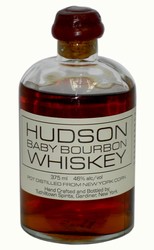
hudson-baby-bourbonTuthilltown Spirits is a really cool distillery – making local whiskeys in new ways and prioritizing the grains available to them indigenously. There is a drive, recently document by the New York Times, for distilleries outside Kentucky and Tennessee to make whiskeys unique to where they are, as opposed to recreating something done elsewhere. I’m pretty sure that’s what lead me to first read about Tuthilltown Spirits, as well as Stranahan’s Colorado Whiskey (who should be getting a review here soon), but I’m having trouble finding the article.

In any event, I recently acquired a bottle of Tuthilltown Spirts’ Hudson Baby Bourbon. It’s 100% corn bourbon, aged for only three months in small oak barrels. The Baby Bourbon’s use of 100% corn sets it out as something of a rarity. Federal law requires bourbon to have at least 51% corn, but few bourbons have more than 80% corn. Eric Asimov had this to say about the Hudson Baby Bourbon:

So what happens if you take corn whiskey and put it in charred new oak barrels? You get Hudson Baby bourbon, which is the only 100 percent corn bourbon that I know of, and I have to say, it’s awfully good – mellow and fruity with just a touch of sweetness, but not nearly as sweet as, say, Maker’s Mark, to take another young bourbon. I think the corn character is what makes it so mellow, which is unusual in a bourbon aged less than two years (at which time it can be called “straight bourbon’’ – you learn a lot browsing the federal regulations).

I found the nose of the baby bourbon to have a fairly strong caramel and citrus tones. The first sip brings a lot of lemon and orange peel flavor up front, along with a brief hit of pepper. It mellows towards the back of the tongue with a nice hit of vanilla. It leaves with a bit of acidity, but is very smooth for 92 proof whiskey. It was an easy-to-drink bourbon that retained a great deal of complexity without being too sweet.

I’d say that this was probably one of the best bourbons I’ve ever had and is probably going to challenge the Pappy van Winkle 20 year a run for the best bourbon I currently own. I just really enjoyed it in a way that I didn’t expect.

Normally for reviews I like to taste a spirit neat, with ice, and then in a cocktail or two. But for this I stopped after having the Baby Bourbon on ice. It was just that good. Also, since the bottle is only 375 mL and runs at about $40 a pop, I wasn’t prepared to make such a big dent in the bottle just yet, especially since I’m not sure if I can find more in DC.

Update:

Via the comments, check out this video of The Happy Hour Guys at the Tutilltown Spirits distillery.

Posted by: Matt Browner Hamlin | February 28, 2009

NY Blue Laws

I’m in New York City for the weekend so I thought I’d swing by Astor Wine and Spirits Center, one of the east coast’s best liquor stores. I wasn’t really looking to get anything, but I thought that there was a good chance that I’d be able to find some interesting bitters. And after all, bringing a couple little bitters bottles back to DC is a whole lot easier than most anything else than you’d get in a liquor store.

I got to Astor and perused their impressive array of digestifs, liquours, bourbons, and gins (in that order). It’s a great selection, though I was expecting a big range of rare American whiskeys. Oh well. After geeking out over what they had (and didn’t have) I decided to do what I intended and track down some bad ass bitters. I hadn’t seen any to this point in the store, so I asked a clerk where they were located. He replied: “We don’t sell bitters.” His English wasn’t great so I wasn’t sure he understood me – I’d said “bitters” not “beer.” We went a couple rounds back and forth and at one point he said, “We don’t sell bitters because they don’t have any alcohol.” After picking my jaw up off of the floor, I explained to him that in fact bitters had a very high alcohol content, they just met a different standard with the government that allows them to be designated as a food and not a spirit.

That’s when it hit me. It wasn’t that Astor was making a snooty decision that bitters didn’t count as alcohol worthy of their attention – which the clerk had somewhat conveyed – but that New York state’s blue laws restricted what liquor stores can and cannot sell. Liquor stores can’t sell beer and apparently they can’t sell bitters either. What a disappointment! I’d expected a huge array of American and imported bitters, but the one store in the northeast most likely to be able to assemble a great collection of bitters is prohibited by law from selling them.

I don’t know the history of New York’s blue laws, particularly as they relate to the division of beer sales from liquor and wine sales. But it has always struck me as a particularly absurd law. Now that I know that it affects bitters, too, it is even more absurd.

Posted by: Matt Browner Hamlin | February 26, 2009

Washingtonian Bartenders Chat

The Washingtonian ran a DC bartenders chat with Chantal Tseng (Tabard Inn), Derek Brown (The Gibson), Todd Thrasher (PX), and Gina Chersevani (PS 7’s). It’s pretty fun and definitely worth a read for insight into cocktails, spirits, and bars from some of DC’s best bartenders.

Noticabley absent: Adam Bernbach of Bar Pilar, who is the kind to hold a grudge. I’m pretty sure he put Washingtonian on notice, Colbert style!

onnoticebernbach2

(I kid)

Posted by: Matt Browner Hamlin | February 26, 2009

Central Michel Richard

Note to self: take notes of what you drink!

I’d been much better the last few months about taking notes or getting copies of menus when I go out for fine cocktails. So good, apparently, that I must have gotten a little cocky.

Last night I had dinner and a couple of cocktails at the bar of Central Michel Richard. I had a Gin Blush, which had gin (duh), Campari, San Pelligrino Chinotto soda, and I believe orange and lemon juices. It was great – light, tart, and beautifully colored. There was  a great balance between the bitter of the Campari and the sweetness of the juice and soda. I also had whatever the rhubarb cocktail was – it was delightful and I’m kicking myself for not remembering it exactly, but I believe it had rhum agricole, aperol, rhubarb bitters, and something else. Seriously folks, I feel like I’m back at Week One of being a cocktail blogger.

So this looks like it’s probably going to be my worst review in a long, long time. Ugh. Obviously I’ll have to go back to Central and do it proper, which may have been my subconscious goal to begin with, as the drinks and food were great and I would love to visit again.

Posted by: Matt Browner Hamlin | February 26, 2009

Brush Up On Your Tiki History

Via Trader Tiki, I see that Doug of The Pegu Blog has a great series of posts on the history of Tiki. As I’ve written before, I am a fan of tiki culture but have never really gotten into the drinks in the same way I’m into more classic cocktails. That said, I dig learning more about the history when I can.

Doug’s posts on the elders of tiki, Don the Beachcomber and Trader Vic Bergeron, are great biographies of these master drinkmakers. Doug shows that both used intense business savvy and a love of entertaining to basically create tiki culture on their own. As rivals, they together built a drinking subculture that spread like crazy across America in the middle part of the 20th century.

Most interesting, though, is Doug’s efforts to figure out which of the two elders really deserves credit for creating the Mai Tai. I’m hesitant to share Doug’s conclusion, as he makes a very strong case as to whether Don or Vic’s recipes should be taken as the original Mai Tai. But I’ll quote a passage of the beginning of Doug’s balancing of sides in the Mai Tai fight:

Don claims to have first served his Mai Tai in 1933, an assertion that is repeated as fact by his partisans, and spoken with skepticism by Vic’s gang. No one seems to have any historical evidence of this. Not a menu, a celebrity diary entry, nothing. I suspect that if there was, it would always be front and center in the debate. Vic states he invented it in 1944. That’s a pretty big discrepancy.

We should remember that a well made Mai Tai is the best Tiki drink that ever was poured. Period. Of that, partisans on both sides emphatically agree. Or at least I think so, so that makes it fact.

In the late thirties, these men were the hippest things going in California’s two great cities, and shared a huge percentage of their clienteles. If Don had this killer libation in his bag of tricks and Vic didn’t, why is this not common knowledge, rather than uncommon controversy? Of course, we who live today in the age of the Internet and mass media are a little out of touch with how slowly and imperfectly information used to travel.

Doug makes a very well argued case overall and frankly I’ll just say that I agree with where he ends up, based both on how he presented the history of the Mai Tai and what little I already knew about the drink’s origins.

Posted by: Matt Browner Hamlin | February 25, 2009

Sazeritif & Negative Space Cocktails

So yesterday I posted the recipe for the Sazeritif, by SeanMike of Scofflaw’s Den. In the post, I said that I thought the cocktail could be a negative space Sazerac. I wrote:

I wrote about negative space cocktails following having the Fakie Alexander by Adam Bernbach at Bar Pilar. Here’s what Adam wrote me about negative space options:

As far as the “fakie,” I’m really into Brandy Alexanders and I’ve really been exploring the idea of the “negative space” cocktail (a cocktail in which you replace a major ingredient with it’s opposite in order to imply the missing note). In this case, I replaced the cacao with chinato (the Italian’s favorite pairing for chocolate). Hope it worked for you.

I have to imagine that this was the same concept SeanMike was going for, as it makes a lot of sense. The Sazerac doesn’t have sweet vermouth, but rye is so often associated with sweet vermouth because they work well together (as the Vieux Carre and a la Louisiane abley demonstrate). I’ve never seen rye used as a rinse before, but I think it could work. I look forward to trying SeanMike’s creation and think it’s a great addition to the list of classic cocktails to honor New Orleans on Mardi Gras.

I happened to be at Bar Pilar last night for a Tuesday Cocktail Session (which incidentally closed with a Fakie Alexander for me) and talked with Adam about the Sazeritif. He pointed out that negative space cocktails shouldn’t have the paired ingredient — eg, the Fakie doesn’t have creme de cacao — hence the “negative” aspect of the cocktail. The absence is what brings in the association between the new ingredient and the old cocktail. Instead, the Sazeritif adds a traditional partner of rye (the sweet vermouth), puts the rye in a different, less prominent role, and removes the sugar from the Sazerac and adds a bit more absinthe directly to the drink. Since rye and vermouth are both in the cocktail, it isn’t negative space.  But it’s also not a reverse Sazerac, which would probably be an absinthe base and a rye rinse. It’s something different. Maybe a fakie reverse cocktail? It seems like a category of cocktail making is missing…

On a different note, I did make myself a Sazeritif last night before dinner. It was a nice vermouth based cocktail and it reminded me that I really didn’t have a vermouth-dominated cocktail in my regular rotation. I wasn’t blown away by the rye rinse. Suspecting that rye would be understated, I went with Wild Turkey 101 Rye, which is the strongest stuff I have. The cocktail tasted great, but the rye rinse didn’t add the same sort of nose the absinthe does in the Sazerac. Oh well. I guess it really isn’t fair to compare other spirits against absinthe when it comes to the sort of nose they add to a cocktail.

Lastly, Adam has updated the regular cocktail list at Bar Pilar and it now includes the Fakie Alexander, among a number of other great drinks.

Posted by: Matt Browner Hamlin | February 24, 2009

Mardi Gras Cocktails

I’ve never been to New Orleans, so I’ve obviously never been to New Orleans for Mardi Gras. I’m not sure whether this is something I feel bad about or not, but another year passes without making the trip to the Big Easy for one of America’s biggest, craziest parties. That said, today is probably a good day to drink some New Orleans cocktails.

Sazerac

1/2 oz simple syrup
3 dashes Peychaud’s bitters
3 oz rye
2 dashes absinthe

Fill a small rocks glass with ice and allow it to chill. Empty the ice into a second rocks glass. In the first glass, add the syrup, bitters and whiskey and stir. Pour the contents of the first glass into the ice filled second glass. Pour the absinthe into the first glass and twirl the glass (preferably in the air with great enthusiasm) to coat it well. Discard the remaining absinthe. Strain the contents of the second glass into the absinthe-rinsed first glass. Garnish with a lemon peel twisted over the top of the glass.

This is one of my favorite cocktails in the world. If you’ve never had it, you owe it to yourself to give it a try, especially if you’re a fan of whiskey cocktails like an Old Fashioned.

Vieux Carre

3/4 oz rye
3/4 oz brandy (I prefer with cognac)
3/4 oz sweet vermouth
1/8 oz Benedictine
dash Peychaud’s bitters
dash Angostura bitters

Build over ice in an old fashioned glass.

Another really great cocktail – a bit more complex than the Sazerac, at least as far as the ingredients go. If you like the Vieux Carre, there’s a pretty great chance that you’ll love the Cocktail a la Louisiane.

Cocktail a la Louisiane

3/4 oz. rye
3/4 oz. Benedictine
3/4 oz. sweet vermouth
3 dashes absinthe
3 dashes Peychaud’s bitters

Stir with cracked ice and strain into chilled cocktail glass. Garnish with a cherry.

The a la Louisiane is one of my favorite cocktails — I was introduced to it by Marshall of Scofflaw’s Den, who has been on something of a mission to popularize it in Washington DC. So far he’s been pretty successful as far as I can tell.

Speaking of Scofflaw’s Den, I just saw that SeanMike created what looks to be a negative space Sazerac, the Sazeritif, for last week’s Thursday Drink Night of rinses.

Sazeritif

2 oz sweet vermouth
2 dashes Peychaud’s bitters
1/2 dash of absinthe
Rinse: rye whiskey

Rinse glass with the rye whiskey. Stir and strain remaining ingredients, and sit back and enjoy this tantric potion.

I haven’t tried this yet, but it looks like it will be right up my alley. As a reminder, I wrote about negative space cocktails following having the Fakie Alexander by Adam Bernbach at Bar Pilar. Here’s what Adam wrote me about negative space options:

As far as the “fakie,” I’m really into Brandy Alexanders and I’ve really been exploring the idea of the “negative space” cocktail (a cocktail in which you replace a major ingredient with it’s opposite in order to imply the missing note). In this case, I replaced the cacao with chinato (the Italian’s favorite pairing for chocolate). Hope it worked for you.

I have to imagine that this was the same concept SeanMike was going for, as it makes a lot of sense. The Sazerac doesn’t have sweet vermouth, but rye is so often associated with sweet vermouth because they work well together (as the Vieux Carre and a la Louisiane abley demonstrate). I’ve never seen rye used as a rinse before, but I think it could work. I look forward to trying SeanMike’s creation and think it’s a great addition to the list of classic cocktails to honor New Orleans on Mardi Gras.

Posted by: Matt Browner Hamlin | February 23, 2009

New Blog Design

As you’ve probably noticed, I put in a new site design today. It features a photo I found on flickr by landerson of the Library room in Bourbon & Branch. I think it’s pretty cool…

What do you think of the new look?

« Newer Posts - Older Posts »

Categories