Posted by: Matt Browner Hamlin | November 10, 2009

Review: Teardrop Cocktail Lounge

My second stop in Portland was the Teardrop Cocktail Lounge in the Pearl District. I realized I had a lot of choices for a second cocktail bar visit while in Portland — Laurelhurst Market, Ten01, Acadia, Secret Society Lounge, and others — but from the looks of things, Teardrop Lounge seemed like it would be best for my tastes. Actually, what really sold me was that in their menu online I saw that they had a cocktail containing a house-made Kina Lillet.

Lillet used to be more of a quinquina – a type of fortified wine that had a bitter quinine taste to it. Unfortunately, the recipe was changed and it became a sweeter, more citrus, less bitter aperitif in the 1980s. As such, many recipes that were crafted to have a bitter Kina Lillet just aren’t the same with today’s Lillet Blanc. You can’t get Kina Lillet any more, though many people have tried to make substitutes (Erik Ellestad being foremost in the spirit archaelogists). Naturally when I saw that Teardrop had their own version, I was curious to try it. After all, there are only so many bars where I can try lost ingredients at and I didn’t want to miss this opportunity.

Teardrop Cocktail Lounge’s appearance and decor is unlike any I’ve ever been to. It has a glass front and cement walls, with modern art hanging on them. It feels more like the kind of design you’d find in an Asian fusion restaurant in some regards. The bar is round and in the center of the room. In its center there is a teardrop shaped island with shelving and, suspended above it, a teardrop shaped glass platform shelf. The white spirits were stored on the glass high shelf, while the dark spirits were stored on the island itself. The bar’s counter is a marbled blue stone and, all in all, it comes across as clean and simple.

When I arrived, it was on the early side of the night. There was one small table near the window occupied and otherwise empty but for staff. I ordered the drink I’d came there for, the African Swallow, made with Martin Miller’s Westbourne Strength Gin, house Kina Lillet, blood orange shrubb, chartreuse elixir, and a lemon peel. It was served in a tall, fluted cocktail glass. The 90.4 proof Westbourne gave the cocktail a very strong gin start, with a bitter orange background from the Kina Lillet and shrub. It finished with a subtle chartreuse profile. It was definitely a boozy cocktail (right up my alley) and in some ways reminded me of Bronx cocktail in terms of the level of citrus imparted on the cocktail on whole.

Shortly after I’d begun to enjoy the African Swallow, the bartender, David Shenaut, asked me how I was enjoying it. I said I thought it was great and that I’d decided to come into the bar on the basis of this cocktail to try their Kina Lillet. Without saying a word, David turned around at poured me a small glass of the house made Kina Lillet. It had a much lighter quinine flavor than I’d expected and instead came across more sweet and punchy. And so it began… David next cracked open a new bottle of their homemade tonic, which was in no way shy in the amount of quinine it contained. Then he poured a small shot of the blood orange shrubb, which was barrel aged and made with less vinegar than one would normally see in a creole shrubb, giving it a more mellow orange and spice taste. This was followed by a small glass of their decanter bitters. Yes, a small glass of bitters. Though the decanter bitters were very pepper and had a strong lavender flavor, they were just about quaffable (perhaps good with some of the aforementioned tonic?).  David wasn’t done yet, bringing out a bottle of creme de cacao, which had an intense chocolate flavor. I didn’t have any cocktails with it, but I would have loved to play around and pair it with one of the house orange spirits. Then, in a move that could only be described as being driven from a desire to make me move to Portland, David poured me a sample of their house Amer Picon, a spirit that is not sold in the US, but is still available in Europe. It was quite subtle and smooth, something that David said was a goal for most of their house spirits and bitters. They want to keep their homemade products accessible and handy to work with. To my pallet, they succeed quite well.

By this time, as one should expect, David and I were geeking out over cocktails. He was telling me about his experiences guest bartending at PDT and working as a cocktail apprentice bartending at Tales of the Cocktail. I was telling him about my favorite bars, cocktails and spirits. It was a blast, with none of my subsequent cocktails coming from the menu.

He followed up my wide-ranging sample with a cocktail that was right up my alley. The Ephemeral is made with Ransom Old Tom Gin, a delicious product made in Oregon with a heavy cardamon flavor, Dolin Blanc, a quarter ounce of St. Germain Elderflower Liqueur, and celery bitters, garnished with a lemon peel. As I said, this is the sort of cocktail that I always say does it for me — spirit based, boozy, slightly bitter sweet. It was light, sweet, and smooth, as well as incredibly well balanced. It retained a savory flavor, something that is often challenging when St. Germain is involved.

Next up was a Burrough Punch, which was a real adventure in mixing differing spirits: Amaro Nardini, El Tesoro Reposado tequila, Batavia Arrack, and Carpano Antica vermouth. The cocktail was served in a glass whose walls were lined with thin orange slices. It was simultaneously strong, creamy, bitter and had a really interesting layer of tequila flavor. There was real heat and spice from the combination of the Batavia Arrack and the tequila. This drink just overflowed with flavor and was by no means a shy cocktail.

After the donkey came Apres Les Chat (After the Cat), made with 100 proof Rittenhouse Rye, Fernet Branca, Cynar, Carpano Antica, and house grenadine. It was strong and sweet, like a much, much, much more complex Manhattan. It was boozy, but balanced and despite the combination of Fernet and Cynar, was not too bitter.

Staying in the classic, boozy, and savory family, next up was a Brooklyn. A real classic cocktail that, like the Liberal, has largely been made extinct due to the unavailability of Amer Picon, the David’s Brooklyn was made with both bourbon, rye, house Amer Picon, maraschino, dry vermouth, and garnished with an orange peel. I love cocktails that have a strong spirit and orange profile and this had it in spades. Interestingly, the intense orange flavors, paired with dark American spirits, gave me an almost chocolate flavor.

I finished with a drink whose name I don’t have written down, but was made with mescal, Aperol, maraschino, and lime juice. I imagined this as the landing place for a cocktail that may have started life as a mescal-based Papa Doble variation. It was served with a fair bit of ice chips floating in the drink and had a nice bitter taste from the maraschino, while retaining some sweetness and tart from the lime.

While at Teardrop Cocktail Lounge, I enjoyed their Tuna Tartare, served with avocado and grapefruit, as well as potato gnocchi with rabbit ragu and pecorino cheese. Both dishes were fantastic — great compliments to the quality of cocktail they were serving.

As you can probably tell, I loved my visit to Teardrop Cocktail Lounge. David was a phenomenal bartender and I had a great time talking with him about cocktails and spirits throughout the night. The drinks he served me were inventive, to be sure, but they were also cocktails that really were in the range that I like the most. He charted me through a range of base spirits and bitter spirits, but each drink was something I liked a lot. If pressed, I’d probably say that either the Ephemeral or the Apres Les Chat were my favorites, but who’s keeping score?

I said it yesterday but it bears repeating. Portland is a phenomenal cocktail town and one that I’d be more than happy to visit again soon.

Posted by: Matt Browner Hamlin | November 9, 2009

Review: Beaker & Flask

I was in Portland, Oregon for work last weekend. I took the opportunity to check out two cocktail bars that I’d heard good things about. I’ll just spit it out. I’ve spent a lot of time over the last year putting forward the contention that Washington, DC is, per capita, probably the best craft cocktail town in the US. After this weekend, I’d say that Portland more than gives DC a run for our money.

My first visit was to Beaker & Flask, which was conveniently located a short walk from the hotel where I was staying. Situated on the corner of a larger building, the single room bar and restaurant had high ceilings and an airey feel. On the street side corner, floor to ceiling windows gave customers a view of the downtown Portland skyline (be that as it may). I got to Beaker & Flask around 6:30pm on a Friday, during their happy hour. The happy hour menu included four cocktails that were only $5 prior to 6pm and $7 afterwards. The going rate for the rest of the menu? $8, making this the most affordable, hardcore craft cocktail bar I’ve ever had the pleasure of visiting.

Beaker & Flask is really shaped by the long, swooping bar that runs almost the full length of the space. To the right of the entrance is a series of rectangular booths for parties of four or so. To the left of the entrance, a series of larger round booths for bigger parties. In the space between the bar and the round booths there are a handful of standing round tables. Along the wall, there are a number of small libraries of bar and cocktail books.

The bar has a pretty great door policy. Reservations and the waiting list determine who get seats, but you can wait at one of the round standing tables and still receive waitress service, space permitting. When I arrived, the bar was full, so I had to wait at a standing table for a seat.

Beaker & Flask

The Cold Shoulder

I was promptly given a menu and after some deliberation ordered The Cold Shoulder, made with gin, fresh grapefruit juice, Zirbenz Stone Pine Liqueur, and grapefruit bitters. Pictured left, it had the most delightful pink froth of tiny bubbles in an up cocktail glass. The Cold Shoulder was lighter and more refreshing than I’d expected. It was sweet, though the pine liqueur touch to it was lighter than I’d expected. The pink grapefruit is very clean and almost creamy. The gin isn’t dominant, leading me to think this is a pretty good cocktail to serve people who think they don’t like gin.

Shortly after The Cold Shoulder was delivered, a space opened for me at the bar and I was seated. The bar itself was a dark, slate colored slab of stone, thick and wide. The back bar was clean and packed with a great array of spirits and liqueurs, some hard to get, some (like Maraska Pelinkovac) completely unfamiliar to me.

In addition to being a great craft cocktail bar, I’d heard Beaker & Flask had a phenomenal menu. I started off with an order of Chanterelle Mushrooms, Parsley, Garlic, and Smoked Bone Marrow, which I topped with a squeeze of fresh lemon. I followed it with an order of Grilled Alaskan Spot Prawns, Millas, and Fall Vegetables. Both dishes were rich, fresh, and full of flavor. They didn’t overpower the cocktails, but instead drew out the range of my pallet, tantalizing me with more flavor than I had expected. One thing was clear in my visit to Portland, they get a lot more fresh produce than we do in urban Washington and it came out both in the food and in the cocktail.

My next drink was also from the menu and was most definitely not the sort of cocktail I’m in the habit of ordering. I was drawn to it, though, because of the inclusion of pears as an ingredient. With fall clearly moving forward in Oregon, I thought it could be fun. The Country Touch is made with Pisco, Pears, Yellow Chartruese, and fresh lime juice. The pear flavor in question comes from cooking pears with demarara sugar and then bottling them in a pear brandy. [NB: Due to a small water spill, I can’t read my notes on the precise process used to treat the pear or what spirit they mascerate in…] The result is a rich, poached pear flavor that plays a big role in the Country Touch. The cocktail starts with a heavy lime taste, but swiftly moves to pears and honey. The pear flavor is so like a poached pear that it has an almost carbonated taste. The Chartreuse is subtle and fades ahead of the pear. Likewise, the lime flavor steps back over time. I’m not sure that I’d say this is a well balanced cocktail, but it was enjoyable nonetheless.

The last original cocktail prepared for me by the barman Tim was a Negroni variation called a Viking Quest. It was made with Aquavit, Campari, and Marcarini Barolo Chinato, finished with a lemon peel. This was a great cocktail, right in line with the flavor profile I’ve lately liked the most. It’s similar to a Negroni, but has a lot more going on in the bitter/savory department. It also takes on a brilliant ruby color from the combination of Campari and chinato. It has a very bitter front taste and I got some taste of wormwood, though I think it’s more likely to be the quinine from China Calisaya bark in the chinato. What was most interesting to me, though, was that the chinato paired with the bitter orange Campari implied a rich chocolate taste, something chinato is often paired with.

I was really impressed with both the food and drinks at Beaker & Flask. The cocktails were quite well made. The menu was interesting. And the bartenders were professional and precise. I will definitely plan on returning the next time I’m in Portland and I’d certainly encourage any readers in the Portland area to check it out if you haven’t already.

Posted by: Matt Browner Hamlin | November 5, 2009

Grand Concourse Cocktail

Last night, prior to Game 6 of the World Series, I felt the urge to have a cocktail I haven’t had in a while: the Bronx Cocktail. It’s a classic, made with gin, sweet and dry vermouth, and orange juice in a 2:1:1:1 ratio. In fact, it was so good I decided to make another one.

Unfortunately, as I started to prepare my next round, something happened that hasn’t happened to me in a very long time: I ran out of dry vermouth. As a result, I had rejigger the recipe to come up with something similar, taking advantage of what dry vermouth I had left. I wanted to stay within the framework of the Bronx, and a simple addition made something with which I was very happy.

Grand Concourse Cocktail

2.0 oz dry gin (Boodles)
1.0 oz sweet vermouth (Noilly Prat sweet vermouth)
0.5 oz dry vermouth (Noilly Prat dry vermouth)
0.5 oz vermouth bianco (Martini & Rossi bianco)
1.0 oz fresh orange juice

Combine all ingredients in a shaker, add ice, and make some noise. Double strain into a chilled cocktail glass.

It’s very similar to a Bronx, but there’s a bit extra sweetness and spice from the bianco. I was definitely a fan of it and I’m going to be adding it to my repertoire.

Posted by: Matt Browner Hamlin | November 4, 2009

2nd Annual DCCBG Repeal Day Ball

The DC Craft Bartenders Guild is throwing a party to honor the 76th anniversary of the repeal of the 18th Amendment with the passage of the 21st Amendment, bringing the end to Prohibition. The party is taking place at PS7s, from 9pm to 12am on Saturday, December 5th. From the party’s Facebook page:

The DC Craft Bartender’s Guild is holding the Second Annual Repeal Day Ball on December 5th at 9 P.M. to midnight for general admission and 8 P.M. to midnight for VIP ticketholders, celebrating the 76th anniversary of the repeal of prohibition. Enjoy craft cocktails from DC’s best mixologists and food from renowned chef Peter Smith while dancing along to the prohibition-era sounds of the Red Hot Rhythm Chiefs.

This year’s black tie Repeal Day Ball is at PS7’s restaurant, across from the historic first meeting place of the Anti-Saloon League, which launched the legislative agenda for prohibition. We are here to announce our own agenda–to have fun! We will celebrate our freedom in style and have dubbed this year the “Spirit of 76,” featuring our own “Founding Drinkers” dressed as the founding fathers.

Special guests include the legendary bartender and author Dale Degroff and toastmaster Jeffery Morgenthaler.

You can buy your tickets here. Regular entry is $100. VIP entry is $150, which includes an extra hour of food and drink, along with a first release copy of The Lush Life: Portraits from the Bar by Jill Degroff.

Last year’s Repeal Day party was a blast, filled with great cocktails, good food, and lots of really big cocktail fans. I’m headed back this year and definitely encourage any DC area readers to come. The tickets aren’t cheap, but in my experience it’s definitely worth the expense.

Posted by: Matt Browner Hamlin | November 3, 2009

Review: Kahlua Coffee Cream

I was recently sent a bottle of Kahlua’s limited release of a Coffee Cream liqueur. Kahlua Coffee Cream is only available between October and December, a surprisingly small run for a product that should have a decent market for people familiar with the regular traditional coffee liqueur. Also, the winter holiday season is one that I associate with other coffee cream liqueurs. But whatever works for Kahlua.

Here are some details, courtesy of the press release announcing Kahlua Coffee Cream:

This new release is a natural extension of Kahlúa s line of coffee liqueurs, all of which are made with 100 percent Arabica beans.  The coffee beans are shade-grown and handpicked in the Vera Cruz region of Mexico.  Locally sourced ingredients, including Mexican vanilla and cane rum, are key components in creating Kahlúa s unique flavor.  The rich cream adds another dimension to the liqueur, enhancing Kahlúa s signature notes of vanilla, caramel and hints of dark chocolate.

When I first got the bottle, my natural instinct was to whip out a rocks glass, toss in a few cubes and try the Coffee Cream over ice. I’ll admit that there was a time when I was in college that the thought of a coffee cream liqueur chilled over ice sounded like a pretty good idea. Apparently my palate has evolved. The cream is very sweet, far more than I’m used to for spirits I sip on their own. It’s also very rich, with strong, creamy vanilla and coffee elements. In many regards, it is exactly what you’d expect if you’re familiar to the original Kahlua. Incidentally, that also makes it stand out as quite different from other Irish varieties of coffee cream liqueurs.

Kahlua Coffee Cream was the subject of a Thursday Drink Night a number of weeks back. I looked over some of the top submissions and saw that a number of people had used it as a base for flips. Flips go back a long, long way in the history of Western drinking. But they began to take the form we know them now when Jerry Thomas published How to Mix Drinks; or, The Bon-Vivant’s Companion in 1862. In his famous cocktail book, Thomas described a Cold Brandy Flip as brandy, water, sugar, and a fresh egg.  The resulting cocktail is a creamy and frothy drink — one of my favorites with a whole egg in it.

Now since Kahlua Coffee Cream is already quite sweet, I didn’t think I’d need any further sweetener to make a flip around it. After a few tries in different directions, here’s what I came up with:

All Saints Flip

All Saints Flip

1.5 oz Kahlua Coffee Cream
0.5 oz Ramazzotti amaro
0.5 oz Cognac
1 whole raw egg
2 dashes Angostura bitters

Combine all ingredients in a shaker & dry shake. Then add ice and shake until cold and frothy. Strain into a cocktail glass, garnish with ground nutmeg.

I was actually really happy with how this cocktail came out. It’s rich, creamy, and sweet but not too sweet. The bitter from the amaro and bitters, along with the booziness of the cognac, balance out the Kahlua pretty well. Don’t get me wrong, it’s still a fairly sweet cocktail. But it’s complex and fun, too. I haven’t done too much recipe creation that have included egg. Experimenting with different proportions and choices of  dairy product (whole, yolk, white, cream) in this cocktail was pretty cool. I always encourage friends to try cocktails with egg in them because I’ve never had one that I disliked yet.

I also worked on a somewhat simpler flip-esque drink, using bourbon as a base.

Bourbon Coffee Flip

1.5 oz Kahlua Coffee Cream
1.0 oz Bourbon
.75 oz Whole milk
1 egg yolk
3 dashes Bittermens Xocolatl Mole bitters

Combine all ingredients in a shaker & dry shake. Then add ice and shake until cold and frothy. Strain into a cocktail glass, garnish with ground nutmeg.

This cocktail was a bit simpler than the All Saints Flip. The milk and yolk didn’t produce as frothy a flip, but so it goes without the white. Nonetheless, this was a pretty nice, lighter cocktail with a coffee and cream base.

I’m not a huge fan of sweet liqueurs. They’re just not something I enjoy drinking on their own and they can be fairly tricky to use in cocktails. But I think Kahlua Coffee Cream has some really interesting applications for recipes that pair it with other dairy products. As we approach the holiday season, the possibilities for having fun with this are manifold. I’ll keep it close at hand and pass along any other interesting recipes that I come up with.

Disclosure: The review of Kahlua Coffee Cream was made possible because I was sent a bottle for the purposes of sample and review. I was then accidentally sent a second bottle due to a clerical error.

Posted by: Matt Browner Hamlin | November 3, 2009

Portland Cocktails?

I’m going to be in Portland this weekend for work, but I know the city has a great craft cocktail culture and some top bartenders. That said, I don’t have a solid list of bars to visit. Can readers or those familiar with the Portland cocktail scene make any tips or suggestions for spots for me to check out? Thanks!

Posted by: Matt Browner Hamlin | October 27, 2009

Mayahuel

Mayahuel, Phil Ward’s mescal and tequila project a block away from Death & Company in New York’s East Village, has been open for about six months. This past weekend I was able to visit it for the first time. I wasn’t taking notes, so this isn’t going to be much of a formal review, but it was one of the best experiences at a cocktail bar I’ve ever had, so I thought it deserved at least a brief write-up.

Taking a page from my experience of how hard it is to get into Death&Co., we got to Mayahuel shortly after it’s 6pm opening. It was a rainy night and the place was mostly empty. Coming into the bar, there is a foyer on the left that is used for a number of tables. Then you go down a few steps and come to the bar, which also has a few small booths.We were initially seated upstairs. There’s a small staircase in the back of the first floor that leads up to a square seating area. In the center of the upstairs, there was hole cut in the floor (guarded by wrought iron railings), giving you a partial view of the downstairs bar. The opening also created a real southwestern feel of a building with a plaza in the center. The nicest part of this was that it also allowed guests upstairs to hear the crack of ice in shakers downstairs.

Since it was dinner time, we ordered some snacks to accompany our drinks. We began with chips and guacamole (while not the most exciting appetizer, it was a very large portion), followed by Camaron y Vieras con Chorizo – sausage and ham wrapped scallops and shrimp. They came on four skewers and were actually really big for an appetizer. Most importantly they were flavorful and delicious. We closed out with a simple $5 plate of sweet plantains. Each dish was fairly cheap, very generous, and exceptionally tasty.

As readers know, I’m on a Campari kick. Americanos and Negronis are two of my big staples right now. But I’ve also always longed for Picon, something I’ve only had a couple times at The Gibson and homemade versions at Bourbon. Picon is not imported in the US, but it is a delicious potable orange bitter. Mayahuel has a house picon on the menu in a number of drinks, so I naturally gravitated that way.

I began with a Mexicano, made with reposado tequila, carpano antica, and Mayur’s Homemade Picon, along with a splash of club soda. It was sublime, with interesting depth and an added savoriness than the usual Americano and less force than a Negroni. I was instantly ecstatic about our decision to go to Mayahuel over another NYC cocktail bar.

I stayed with the Picon for my second cocktail, ordering a Sunset Park, which is made with Reposado Tequila, Dry vermouth, Mayur’s Homemade Picon & Maraschino. This was right in my wheelhouse for cocktails that I love. It’s strong, savory, and complex, yet incredibly smooth. It was a nice step up from the Mexicano.

Another cocktail that was a big hit was the Lil’ Jig, which my girlfriend ordered later in the night. It is made with Blanco Tequila with Thai Basil, Lime & Yellow Chartreuse. It’s tart, but not overpowering. The Chartreuse gives it both sweetness and complexity, with its spices playing well with the citrus and basil. It was her favorite and certainly a drink that I enjoyed stealing a couple of sips from.

After our second round, we moved downstairs to sit at the bar. Phil Ward, the man himself, was working behind the stick. Despite many visits to Death & Company, I’d never had the chance to sit at the bar when he was working. When we moved downstairs the bar still wasn’t very busy, so it was no problem to quickly strike up a conversation about cocktails, Mayahuel, and the process of making new cocktails. Phil made me a number of new recipes that had yet to make it onto Mayahuel’s menu. He took me through a number of other cocktails with potable bitters as a base, as well as other cool experiments. I really wish I had kept some notes, because I can’t do justice to these drinks from memory alone.

Some cool tidbits from my talk with Phil. He built the original 20 drink menu for Mayahuel in about three days of hardcore recipe creation, a feat that is damned impressive. He says the most important ingredient in any cocktail recipe is balance. I don’t know if truer words have ever been spoken by a bartender. Ward’s understanding of balancing ingredients in cocktails is superior to any bartender I’ve ever had make me drinks. Every single cocktail at Mayahuel (let alone every cocktail I’ve had by him at Death & Company or The Bourgoisie Pig) has been perfectly balanced. Even the new recipes that hadn’t yet been introduced were just as well balanced as the ones that have been on the menu since opening. The degree to which Phil’s cocktails are balanced make me think that he’s likely a supertaster and has a natural gift to help make his cocktails work right.

One thing I haven’t even mentioned is that despite having a menu consisting almost entirely of tequila and mescal based drinks. You’d think that would have been the lede. I was incredibly impressed by the range of drinks on the menu. In many ways, it looked a lot like any other cocktail menu built around gin, rum, and whiskey recipes. The diversity of the menu was impressive, with about 40 drinks or so on it. There were sweet drinks, sour drinks, savory drinks, drinks with eggs, drinks with salt and so on. It really had every sort of drink you would want, with something for every guest. Again, very impressive considering the drinks were all made with tequila or mescal, two spirits that are much maligned in most Americans’ minds.

I loved Mayahuel. From the food to the drinks to getting to chat with one of America’s best bartenders, it was a great night. I look forward to going back as soon as I can…

Posted by: Matt Browner Hamlin | October 27, 2009

The Gibson Expands, Again

Gotta love this news. Reaching again into the file of Things We’ve Long Planned, The Gibson will be opening their second floor for guests this Saturday. Fritz Hahn of Going Out Gurus Blog reports:

Open Tuesday through Saturday, the upstairs features a marble bar with about as many barstools as downstairs and a row of two-top tables lining a window-filled wall. There are two smaller rooms that double as lounges, with tables and couches for around a dozen people in each. Lit by sconces and overhead lights, the overall vibe is that of a retro hideaway; it’s like downstairs but not as dim, thanks to walls painted in lighter colors.

Additionally, the smaller rooms will be available for private parties.

This expansion will make it easier for The Gibson to maintain the larger crowds they built over the summer with the outdoor patio. It should shorten wait time for guests and will hopefully provide an even larger ability to accommodate the growing interest in craft cocktails in Washington DC. I can’t wait to check it out.

Posted by: Matt Browner Hamlin | October 23, 2009

Birch & Barley / Churchkey

I was able to make it by Birch & Barley last night. Or more precisely, I bypassed the first floor restaurant and went to the upstairs bar, called Churchkey. I’ve been at some other bar openings in DC over the last year and found that, generally speaking, they are low-key affairs that usually run out of customers half way through the evening. That is, I wasn’t expecting much of a crowd for opening night. Word had gotten out through some of DC’s professional food and drink blogs that the bar would not be serving any of their 500 bottles of beer on the wall in the fridge, as they had not yet been inventoried. Customers on opening night were left with a mere fifty drafts to choose from plus five cask beers. I thought that these facts would lead to a lower turnout and I could go with a friend, watch the Yankees game, and geek out over some good beers.

Well, apparently I was wrong. We walked in and the crowd at the bar was four to five deep. The place was rocking. It was scene. It was not what I had expected.

My friend Nate and I decided to at least have one round before finding a venue with a more subdued crowd to watch the game at. We perused the menu and both decided to go with cask beers; in my case, a Weyerbacher Imperial Pumpkin Ale. A few minutes later and poof, two delicious cask conditioned potions were in our hand. And they were just as we expected them to be: warm and flat!

We ended up getting a table – sets of booths run along the opposite side of the bar and are actually quite comfortable. We tried a few other draft beers, but had arrived to late to get any food from the kitchen. The charcuterie looked great, in particular. We were able to score some caramel popcorn, a recipe that struck us both as fancier Cracker Jacks.

I was most impressed with the price of the beers. Many beers that normally go for $8-10 as drafts elsewhere were in the $5-6 range at Churchkey. There were even a number of beers that often go in the $15-20 dollar range when served in bottles at other good bars in town that were a mere $8-10 at Churchkey. I didn’t do a close audit, but top to bottom the draft beers on the menu seemed to be priced below what most DC bars have for their stock good draft beers. The bottled beer menu wasn’t out last night, so I can’t compare or assess that, but what they had on display in the glass-front refrigerators at the bar looked pretty good.

My only critique of the draft selection was that it seemed to have a very heavy emphasis on German, Belgian, and American beers. Now, those are probably my three favorite countries of origin, but I do like mixing things up a bit. I didn’t see any Asian, Caribbean, or Latin American beers on the menu. While there were lots of interesting varieties, there were also some things, like Brooklyn Lager, that you can get most anywhere. I don’t mind them having beers from major US microbrews, but I’d much rather see them pulling in the rare, one-off, seasonal brews from a place like Brooklyn. Or eschew a well known brewery like Brooklyn in favor for, say, Six Points, which is a favorite in NYC, but isn’t well known in this part of the country. I’m nitpicking here, though.

All in all, despite the crowd on opening night, I liked Churchkey a lot. I want to see what their bottle menu looks like. I want to try food from their kitchen. I’m looking forward to seeing if it stays a scene spot or if it mellows out a bit. And most of all, I want to see how their draft selection evolves with the seasons. I’m sure I’ll be back soon and will have further bulletins as events warrant.

Posted by: Matt Browner Hamlin | October 22, 2009

OMFG

Photo by ReadysetDC.com

Photo by ReadysetDC.com

A new bar/restaurant with a heavy emphasis on beer named Birch & Barley is opening tonight on 14th street. I walked past the still under construction space about a month ago and did a double take on the size of the bar.  Orr Shtuhl of Young & Hungry has a post up on Birch & Barley that makes me weak in the knees with excitement to try it out:

Birch & Barley, the oft-promised beer bar and restaurant, will open tonight at 5 p.m. And while we’ve drooled over it for months, we’ve heard little about it other than the numbers they promised: 555 bottles, 50 taps, and 5 casks. I admit I was skeptical, worried that the list would be vaporware like the 1,000+ beer menu at The Brickskeller — but a swing by the bar yesterday put me at ease.

Beer director Greg Engert assured me that come tonight there will indeed be beer flowing from all 50 taps and all 5 casks, and from the looks of it, a bottle menu that will have the nerdiest beer nerds returning for “special occasion” beers. But for me, the casks were the real question mark. Cask beer is fresh, unpasteurized beer hand-pumped from the barrel rather than pulled out by carbon dioxide like regular keg beer, giving it a velvety feel. But it’s also more perishable, which is why nowhere in D.C. keeps more than one or two on tap. They’re hard to track down, and hard to sell.

Of the 50 taps, about half will rotate every week or so, while the other half will be good standbys. The dependable session beers include: Victory Prima Pils, Allagash White, Brooklyn Lager, Stone Pale Ale, Smuttynose IPA, Green Flash Hop Head Red, and Climax Nut Brown Ale. $5 for about a 12 oz. glass.

It’s really hard for me to express how good this sounds. I’m a huge fan of The Brickskeller, a legendary beer bar that at one time claimed to have more beers on the menu than any other bar in the world. In fact, my path to being a cocktail geek started at Brickskeller, where I first got into really, really, ridiculously good beers and set off on a path to find out what better tasting spirits were like. Being a beer geek lead in a fairly straight path to being a cocktail geek. But the frustration with Brickskeller is that they invariably don’t have the two-thirds of their menu in stock at any given time and ordering can be quite an ordeal.

That’s why my favorite beer bar in the US became El Bait Shop in Des Moines, Iowa. It’s a divey beer bar, but they have over 100 draft beers on tap — all of which are American microbrews. They augment that incredible spread with a few large, glass refridgerators of some of the finest imported bottles in the world. Enough to be a good selection of imports, but by no means a selection that aims to be all things to all people at all times. I love the concept of only having American microbrews on draft. First because it allows the bar to basically always have beer that they actually have in stock on the menu. Second because they go about getting 100+ beers by getting the full runs of many of the breweries they serve. If you like, say, Dogfish Head, you can try a bunch of what they have to offer before moving on. It’s just a great concept that I haven’t seen any east coast bars replicate.

It looks like Birch&Barley will split the difference a bit between The Brickskeller and El Bait Shop, with 500 bottles and 55 draught and cask beers. The food looks incredible as well. All in all, though I haven’t been yet, I can’t wait to go and hopefully find a new, favorite beer bar.

Posted by: Matt Browner Hamlin | October 19, 2009

Don’t Be Bitter

Michael Dietsch of A Dash of Bitters and Samantha Harrington of Cocktail Culture are hosting a small contest for cocktail bloggers with the prize being a bottle of the very rare Beefeater 24 bitters.beefeater24_bitters The challenge in the contest is to write about a time when I have been bitter about another cocktail blogger’s liquor collection, bar experience, or other paraphernalia.

Well, where to begin? Quite simply I got into cocktail blogging in large part because I was envious of the breadth of knowledge exposed by cocktail bloggers I was reading. I loved the idea of creating recipes for myself, but sharing them publicly for feedback from other knowledgeable people. Cocktail blogging, in turn, lead to the not-so gradual expansion of my home bar. Last year when I started getting into this, I was a regular guest at the Mixoloseum for Thursday Drink Night.  On most Thursday night I would log on with a few interesting cocktail ideas (or so I thought at the time) ready to share. But invariably, while I was able to make my submissions, I never had a big enough bar to make anyone else’s recipes. Ever. It didn’t matter what I did – if a bunch of recipes one week included amaro and I didn’t have any at the time, I would go out and buy some. The next week would roll around and no one would be using amaro any more. The whole act of being a cocktail blogger, it seemed, involved me being jealous of the people who I wanted to be be peers with. I could take a Time Magazine like cop-out and say I am most bitter about You, my fellow cocktail blogger. But that’d be a cop-out and I try to not be lame when there is a serious bottle of bitters at stake.

In terms of travel, I would definitely consider myself jealous of Jeffrey Morgenthaler and Derek Brown, two cocktail professionals who have had the opportunity to travel to enjoy some of the world’s best bartenders. Derek, who writes at The Atlantic’s Mixmaster blog, recently came back from Japan, where he and his wife Chantal Tseng of Tabard Inn visited with some of Tokyo’s finest barmen. The trip was enough to convince Derek that Japan may in fact have better bartenders than the US. Can I even begin to imagine how good the visits to High Five Bar and Tender Bar must have been to bring Derek to this conclusion? It’s an experience I’m very jealous of.

Jeffrey’s travel drink blogging is pretty similar. His write-ups on cocktail events in New York and New Orleans were great, as was his post on Repeal Day in DC (where I had the pleasure of meeting him). But what really knocked my socks off were his post on his trip to Germany last year. I’ve spent a decent amount of time in Dusseldorf, but never been anywhere beyond it and it’s lovely beer gardens. Jeffrey’s write-up on drinking at fine cocktail establishments in Hamburg made me want to hop on the earliest LTU flight and spend some time in Germany. The bottles, cocktails, bitters, and syrups on display in his post are simply mouth watering and certainly made me jealous of not having the same experience.

But the travels and opportunities available to two of the top American craft bartenders isn’t what I would put on this list. After all, both Derek and Jeffrey have made a career out of being professionals of the highest order and both have expanded the reach of their audience beyond the stick through the web. They have great opportunities available to them, but they’re working their butts off for them.

Pegublog-barNo, when all is said and done, I am most bitter of the home bar Doug of The Pegu Blog has built for himself. Doug has a huge series of posts on both his basement bar and other things that one could add to a basement bar. Giving it a read as I write this post, I’m just overwhelmed by how amazing his set up is. The size of a finished full basement. A large bar counter top, a huge back bar, professional style shelving, a true wet bar with a refrigerator and ice making capability…the list goes on. Seriously who wouldn’t be envious of Doug’s killer set up?

Now I’ll say up front that I don’t have very similar stylistic tastes as Doug and I certainly would/will not end up with a basement bar that looks anything like his. It’s very modern (or is the correct word contemporary?) and has more black, steel, and neon than I like. But nonetheless, his set up is as fine as they come and I am deeply envious of it.

You see, I live in an apartment with a fairly small kitchen. A significant portion of the cabinet space in my kitchen is dedicated to storing bottles of liquor, bitters, beer, and syrups. An equally significant portion of my refrigerator is dedicated to perishable spirits, syrups, cherries, and wine. And that’s not to mention my glassware, cocktail tools, and restaurant-style manual juicer. It’s hard to imagine me expanding my operation much more without having a dedicated  home bar, which is why I’m so jealous of Doug’s set up. Moreover, I love entertaining. I love making drinks for my friends. A home bar is exactly the sort of thing that would help me both entertain more people and have more frequent opportunities to sling some of my own cocktail creations for my friends.

So there you go, Michael & Sam. I’m bitter about Doug’s basement bar. I suppose I’ll find out if this post is the sort of response you had in mind when you challenged the cocktail blogosphere to write about who they were envious of. In any event, I’ll just have to keep being jealous of Doug…while reveling in the fact that though he has a killer home bar, he’s in Ohio and has to endure a harder process to get many new or rare spirits. Actually, that’s not much of consultation because I still don’t have a sick home bar and nothing good will come of Doug not being able to find quality spirits to stock his bar with ease.

Posted by: Matt Browner Hamlin | October 18, 2009

The Gibson, New Menus, & Japan

I was at The Gibson for the first time in a while on Friday night. It was the first time I’d been seated at the bar in a while. The back patio has been a great extension throughout the summer, but this week’s cold and rain resulted in a smaller bar. I got there shortly after 6pm and the bar itself was mostly full already.

Since The Gibson opened last November, they have had a small menu consisting of a single sheet of paper that was regularly updated. The menu has been broken down by base spirit and while the frequent changes gave the bar a nice vocabulary of their own cocktails, the menu remained small enough to be easily accessible. My understanding was that within a few months of the initial opening, the bar would produce a larger, multi-page bound menu. For the first time, they now have that menu. Sadly I don’t have pictures of it to share, but it is a hardcover, gray cloth menu consisting of four pages. The first is a bit about the bar and craft cocktails. The second page is their cocktail offerings, broken down not by base spirit but by flavor profile. Again, I don’t have the exact breakdown, but it roughly translated into light cocktails, strong savory cocktails, sweet cocktails, and a fourth category that fit somewhere in between. (Hey I’m a blogger, not a reporter!).

I was at The Gibson with Marshall from Scofflaw’s Den and while I will certainly have more to write on our time chatting, particularly getting a gift of his own Moonshine Bitters, I had a brief conversation with Derek Brown, who was also in the house on Friday night. Derek was recently on a trip to Japan and has written a number of posts for The Atlantic about his experience visiting with some of the best bartenders and bars Japan has to offer. In his latest post on Japan’s craft bartenders, Derek asserted that Japanese bartenders were better than their American colleagues, a bold statement for one of Washington, DC’s finest barmen to make.

I have to admit that after a trip to the High Five Bar, I’m swooning over the “Japanese Way” of bartending. Perhaps it leads me to my biggest faux pas of the evening. When assistant bartender Karita Kazuki of Tender Bar asks me whether I think American bartenders or Japanese bartenders are better, I begrudgingly say, “Japanese.”

The craft of bartending reached Japan at the height of America’s bartender culture, at the end of the 19th century. Some would argue that a German bartender, Louis Eppinger, who tended bar in San Francisco and was a contemporary of the great William “Cocktail Bill” Boothby, helped to bring the craft to the island when he managed the Grand Hotel in Yokohama. What was forcefully abandoned here by prohibition was gleefully embraced in Japan, where it has overtones of the tea ceremony and sushi counters. They have copied classic bartending culture perfectly while adding their own cultural touches.

Regardless of my fascination, I do retract my statement. The U.S. has some of the best bartenders in the world, but the point is taken–the world has learned our craft and taken lessons to heart that some American bartenders have long forgotten. Fortunately, it’s not a competition, and we can learn from each other. If you make it to Tokyo, drop by Tender Bar and enjoy the education of bartending master Kazuo Ueda by the glass.

I spoke to Derek on Friday about his writing on the subject and the conversation was quite interesting. He again marveled at the professionalism and precision of the bartenders he visited with. I had noticed that in his posts on Japanese bars, he was always drinking classic cocktails. He said that there weren’t many unique cocktails to each bar, something which I think is a pretty marked contrast to their counterparts in the US. For better or worse, every top cocktail bar I’ve ever been to has a menu that is, generally speaking, 75-95% original recipes. Sure, many drinks are close relatives to classic recipes, but for the most part, craft cocktail bars in the US develop their own brand and showcase the creativity and ingenuity of their lead bartenders. On the one hand this means a visit to a high end cocktail bar in the US will invariably expose even the savviest connoisseurs to new combinations for them to enjoy. On the other hand, it means bartenders spend less time perfecting their creation of recipes that have already stood the test of time. And as I’m often to remark, the cocktails that have been around for 50-200 years are often times the best ones, the ones that are already so well crafted that the only areas of improvement available are the quality of ingredients and the precision of techniques used in making them.

I haven’t ever been to Japan and obviously I haven’t been to a Japanese cocktail bar. But from what I’ve seen in videos of Japanese bartenders giving seminars to Western audiences and from reporters of people whose opinions I trust like Derek, I think there is a real range in speciality between the US and Japan. Perhaps if Japan’s bartenders can so thoroughly impress one of our masters like Derek, it means American bartenders should rethink how they craft their menus. I don’t want to lose the originality we have, but at the same time, I am excited at the thought of seeing the high degrees of perfection attained at bars like Death & Company or Bourbon & Branch rise even higher.

But beyond that, in terms of how you make craft cocktails amenable to a wider audience, maybe less unique recipes per bar makes sense too? Maybe showing people things they may have heard of but never properly made is more likely to draw them into cocktail enthusiasm than showing them the virtues of a heretofore unheard of combination of pear-infused rye, bitters, and amaro?

Derek is certainly right that it isn’t a competition between the US and Japan. Hopefully both bar tending cultures will continue to take the best from each other to improve their product, their customer service, and the quality of cocktails they serve.

Posted by: Matt Browner Hamlin | October 16, 2009

Upcoming Seminar: “Happy Birthday, Mr. Daiquiri”

The Museum of the American Cocktail is putting on an event next month celebrating the Daiquiri and its many wonderful non-strawberry, non-pomegranate variations. The seminar will be lead by Jeff “Beachbum” Berry, Jon Arroyo of Agraria, Derek Brown of The Gibson, and Phil Greene. It’s a great line up of panelists and the subject

$40.00 per person pre-register
The ‘at-the-door’ fee will be $45.00.
Thursday, November 19 2009, 7:00 – 9:00
Occidental Restaurant
1475 Pennsylvania Ave NW
Washington, DC 20004

It was 1909 when U.S. Navy Admiral Lucius Johnson introduced the Daiquiri cocktail to the United States, here in Washington at the Army-Navy Club, and the Museum of the American Cocktail is set to celebrate it. Join us at the historic Occidental Grill restaurant for a celebration of the 100th anniversary of the Daiquiri’s debut. On Thursday, November 19th, Derek Brown and Phil Greene of the Museum of the American Cocktail will host a seminar on the Daiquiri, featuring renown author and Tiki expert Jeff “Beachbum” Berry, author of such books as Sippin’ Safari, Intoxica!, and Beachbum Berry’s Grog Log and local mixologist par excellence Jon Arroyo, head barman at Farmers and Fishers (formerly Agraria) and Founding Farmers, and Brand Ambassador for Cabana Cachaca.

You’ll get to sample and learn how to make the classic Daiquiri and hear tales about its storied past; you’ll hear about the evolution of the so-called Hemingway Daiquiri, as served at El Floridita in Havana; you’ll learn how the Daiquiri served as a springboard for the great Tiki movement of the 1930s and 1940s, and how it served as a platform for numerous Tiki greats; you’ll learn about the national drink of Brasil, the Caipirinha, and you’ll get to compare and contrast it with the traditional Daiquiri, and much, much more. All the while you’ll enjoy delicious appetizers from the Occidental’s great chefs.

You can register for the seminar here.

This looks like a blast. I’m not sure yet if I’ll be able to go, but I highly recommend readers give it some thought. The Daiquiri is really one of the best classic cocktails out there, but it possesses one of the most maligned and poorly managed public images. I often get strange looks from friends when I tell them daiquiri’s are one of my favorite cocktails. Once I explain that a real daiquiri is just rum, lime juice, sugar and water and that frozen bananas, strawberries, pineapples, and peaches need not apply, most people can get it. But boy do you have to get over a life time of associations with neon things at TGI Fridays… I’m sure this seminar will go a great way to giving you a solid history of the cocktail, as well as an understanding of its relationship with other prominent and less prominent cocktails. Go check it out!

Posted by: Matt Browner Hamlin | October 12, 2009

Henry Public

Photo by Hannah Whitaker of Grub Street New York

Photo by Hannah Whitaker of Grub Street New York

Earlier this year, while taking part in a special tasting dinner put on by Plymouth Gin at PS7s, I had an interesting conversation with Plymouth’s brand ambassador Simon Ford. Simon and I were talking about the trajectory of the craft cocktail movement and cocktail bars. Craft cocktails really started to their resurgence around a number of high end, speak easy style bars and clubs. Places like PDT, Milk & Honey, and Bourbon & Branch come to mind. There was an allure that came with the speak easy style that added to the sensation of finely made cocktails. From their, the craft cocktail movement expanded to bars that while preserving the production of precious, antique, and unique cocktails, didn’t put up such a fuss about being hidden to grow their demand. In this category I’d add bars like Death & Company or Pegu Club. They continued to make incredible cocktails, but were still, for lack of a better term, still scene spots that were hard to get into. Simon and I agreed that there needed to be another evolution in the craft cocktail movement, away from pricey, hidden, bars that regardless of how friendly and amiable the staff were, still conveyed an air of elitism in their craft simply by the nature of their location and business model.

What Simon and I wanted to see was a resurgence of casual, neighborhood bars that were low key enough to be a good spot to have a bite to eat, maybe have a shot of something stiff or a pint of good beer, but nonetheless be able to dispense well made cocktails. We wanted to see bartenders that knew how to make a decent Old Fashioned, which bitters should be used for a Martini or a Manhattan, and made sour drinks with freshly squeezed fruit juice. For craft cocktails to really take the next step out of the niche markets of the bars where they currently reside, there would need to be an embrace of craft cocktail techniques at more low key bars. To put it another way, as the cocktail world stands now, it is gauche to go to the top bars and order a beer or a high ball or a glass of wine. A more casual drinking environment would remove that stigma – drink whatever you feel like – but if you wanted a nice cocktail, you’d still be able to get it.

Here in Washington, DC I saw Bar Pilar and Bourbon as the sorts of places that come closest to this. But since Adam Bernbach left BP, I’ve only been back a couple times and obviously the quality of the cocktails aren’t the same as they were with him there. Bourbon can certainly be a great spot for cocktails, but it’s a bit more incidental to the experience than I’m looking for in the casual cocktail bar (though I’m clearly being nit-picky).

On Friday night, after my failed attempt to get a reservation at PDT, I was invited out by my friends Franz and Mike, who writes Whisky Party, to a new bar in Brooklyn: Henry Public. This was actually the first night that Henry Public was open as part of their soft launch (which included private events earlier in the week). And, quite simply, Henry Public is the closest thing to what Simon Ford and I were talking about as the next area for growth in the craft cocktail movement.

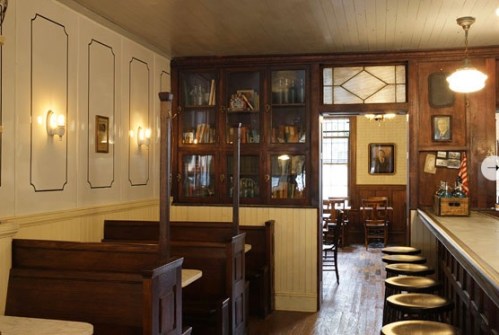
Sitting mid-block in an old tenement style building, Henry Public is decorated like a bar that has been around for about one hundred years. Old light fixtures, a period back bar, and antique, well-worn furniture and bathroom fixtures show a very detailed sense of style. The music is mostly old jazz and blues, played at a comfortably low volume to facilitate easy conversation. The saloon-style bar is owned by the same folks who own Brooklyn Social Club, a more trendy cocktail spot. Talking to some of the staff and owners on Friday night, it was clear that they were looking for a Walt Whitman-style bar in honor of Brooklyn from years past (though in New York Mag partner Matt Dawson notes that Whitman didn’t drink, though they have egg creams on the menu as an option for his ilk). All in all, the decor and ambiance are just awesome – conducive to hanging out and enjoying the company of the people you’re with, along with some tasty drinks.

Henry Public has a very simple food and cocktail menu. The food includes burgers, a turkey sandwich, a delicious grilled cheese, bone marrow, oysters, a few snack items, and fried dough balls called Wilkinsons (I believe). I had the grilled cheese and folks I was there with had the burgers. We heard people at neighboring tables rave about the turkey sandwich and bone marrow. The dough balls were pretty extravagant too — a great dessert to share as a table. In short, the menu was perfect for hanging out over drinks, while not being so big as to become a destination spot for dining.

The one page drink menu similarly included a nice range of cocktails without being overwhelming. Eight of the drinks were $10 and the last four are $11 — priced substantially below many of the high-end craft cocktail bars both in Brooklyn and across the East River in Manhattan. Beers were cheap, too – with a number of fine draft options for $6. The cocktails were all originals, though most were variations of classic recipes. This allows, in my view, Henry Public to have their own identity while bringing novice cocktail drinkers in the door with interesting drinks that included bitters, egg, and absinthe. We were a party of five, so we got to try many of the cocktails, and with one exception everything I had was pretty fantastic.

The most popular drink was the Wide Awake Cocktail, which every one at my table had at one point except me. It’s a variation of the Corpse Reviver #2, made with gin, lemon, fresh ginger, ginger liqueur, and Islay scotch. It was a pretty great drink. The scotch really performed similarly to absinthe in a Corpse Reviver, giving the Wide Awake Cocktail a bright smokiness that complimented the bracing tart of the lemon and ginger. What was particularly interesting to me was how popular this drink was; Mike and another one of his bloggers at Whisky Party were naturally receptive to the use of scotch, but everyone else, myself included, found it really compelling too.

I actually began with the Oddfellow, a variation on a Papa Doble, made with rum, lime, grapefruit, maraschino, and a house bark and root syrup. While otherwise similar to a Papa Doble, which most readers will know is one of my favorite cocktails, the bark and root syrup gave it a nice spice that added greater depth and complimented the maraschino’s bitter sweetness well.

Henry’s Martini is an interesting type of Perfect Manhattan, made with Old Tom Gin, “two vermouths” and orange bitters. I found out the two bitters were Dolin Dry and Carpano Antica Formula — a pairing that I haven’t seen used before. What made it work so well, and with the strong Old Tom, was that it was about three-quarters of an ounce of Dolin Dry to about a bar spoon of Carpano Antica. The Carpano didn’t overpower the drink at all, something that I would have expected from the use of the light Dolin.

I think the most interesting cocktail of the night for me was the Brooklyn Ferry, made with rye, Carpano Antica, maraschino, and absinthe. This is a really cool variation on a Remember the Maine, with the maraschino liqueur substituting for Cherry Heering. It also played into the rule that cocktails made with most sweet vermouths are cocktails of that base spirit, while a cocktail made with Carpano Antica is really a Carpano Antica cocktail. The fabled vermouth played very strongly in this drink, even up against notably bold ingredients like rye, maraschino, and absinthe. That said, while the Carpano was strong it was nonetheless a well-balanced and complex cocktail.

The only cocktail of the night that didn’t really seem to work yet was the Ward Six, a variation of the Ward Eight, made with applejack, orange juice, lemon juice, and pomegranate molasses. While the apple flavor of the applejack maintained a solid presence despite the heavy citrus, it just wasn’t in balance. The drink was overly sour, though I spoke to to one of the bartenders, Mark, about it and he said they had cut down the lemon juice to only about a quarter ounce. He said they were struggling with the recipe and hadn’t found the right spot yet. I’m not quite sure that my drink had that little lemon; either it was too heavy in the lemon department or the oranges were too sour themselves. Additionally the grenadine was a bit strong too. Hopefully they’ll find a good balance for this cocktail, as having an applejack cocktail on the menu during fail makes great sense.

I won’t go into them, but my friends had a number of other cocktails on the menu. The Kings County Sour, made with rye, lemon, sugar, egg white, and a port float, was reminiscent of The Gibson’s Brunswick Sour, though substantially more frothy and creamy. The Eagle’s Dream was a beautiful drink made with gin, lemon juice, sugar, egg white, and creme de violette. It might be one of the few drinks on the menu that isn’t an original. Cocktail Database has a recipe for the Eagle’s Dream Cocktail that includes creme yvette; the substitution of creme de violette is the only visible difference. The Public Smash was pretty similar to many other bourbon smashes, this one made with bourbon, mint, maple syrup, and aromatic bitters. It’s a nice classic cocktail, but not one of my favorites (hence my decision to, you know, not order it for myself).

One thing to note is that the selection of spirits at the bar was far more limited than what you’d see at most craft cocktail bars. While there was a fairly decent range of gins, the selection of rums, tequilas, bourbon and rye seemed very small. Generally the ingredients available weren’t as precious as most other cocktail joints, something that likely is a duel product of how new the bar is and how casual the owners want it to be. Nonetheless the fruit juices were freshly squeezed, the array of bitters and syrups was large, and the bartenders knew what they were doing. While I wouldn’t say there was the 100% commitment to perfection that you see at bars like Death & Co. or Bourbon & Branch, it was still great stuff…and exactly the sort of cocktail bar that I think we need to see more of popping up, hopefully in a neighborhood near me.

Towards the end of the night we moved to sit at the bar and spent some time talking to Marty, who had previously worked at Brooklyn Social Club. He conveyed the similar attitude about having good cocktails without the craziness of other high-end bars. The other bartender, Mark, noted that while there were plenty of people ordering beers and high balls, most guests seemed either knowledgeable or curious about cocktails. They want the bar to be a neighborhood joint and it seems in its early going, they’re doing well. I rarely go out to Brooklyn when I am in NYC, but I can definitely see myself making the trip to spend another long evening at Henry Public. If you’re in the city, check it out at 329 Henry St. (near Pacific St.), Cobble Hill, Brooklyn — a short walk from the Borough Hall subway stop.

Posted by: Matt Browner Hamlin | October 9, 2009

PDT FAIL

I’m headed up to New York City tonight to see my best friend and his sister, both of whom are celebrating their birthdays this week. I figured it’d be nice to take them to PDT. My buddy Austin has never been and I’ve been planning my next trip since my first one a couple weeks ago. When I called for my previous visit, it took me ten calls to get through for a reservation on a Saturday night. This time I expected it to take longer, but boy was I unprepared…

It took me ninety-seven calls to get past the busy signal. I’m not joking. I have an iPhone and it keeps track of these things. Unfortunately, that took forty minutes and by the time I got through, they were full for the night. Sigh.

I guess I’ll just have to try to make it into another one of NYC’s fine cocktail establishments. I’m leaning towards Death & Company, Mayahuel or The Bourgeois Pig…but any of them will probably require a wait. Sometimes, life is just hard…

Posted by: Matt Browner Hamlin | October 5, 2009

FTC, Freebies & Astroturf

Updated Twice Below

This is interesting. The AP reports that “the Federal Trade Commission will require bloggers to clearly disclose any freebies or payments they get from companies for reviewing their products.” The rules will take place on December 1st, 2009. The FTC’s ruling can be read here (PDF link). It seems pretty clear that cocktail blogs like this one are very much what the FTC has in mind with this requirement. From the new rules:

Example 7: A college student who has earned a reputation as a video game expert maintains a personal weblog or “blog” where he posts entries about his gaming experiences. Readers of his blog frequently seek his opinions about video game hardware and software. As it has done in the past, the manufacturer of a newly released video game system sends the student a free copy of the system and asks him to write about it on his blog. He tests the new gaming system and writes a favorable review. Because his review is disseminated via a form of consumer-generated media in which his relationship to the advertiser is not inherently obvious, readers are unlikely to know that he has received the video game system free of charge in exchange for his review of the product, and given the value of the video game system, this fact likely would materially affect the credibility they attach to his endorsement. Accordingly, the blogger should clearly and conspicuously disclose that he received the gaming system free of charge.

The manufacturer should advise him at the time it provides the gaming system that this connection should be disclosed, and it should have procedures in place to try to monitor his postings for compliance.

Many, though certainly not all, of the reviews of spirits that I post on this blog are made possible because of free samples I receive from liquor companies or their public relations agents. While we’re talking about a lot less valuable products than the video game system cited in the FTC example above, liquor costs money and it adds up.  This blog is a hobby for me and  I’ve never received monetary compensation for writing or nor have I sold advertising here. Frankly, reviews wouldn’t make up as much of the content on this site if I was only reviewing products that I purchased myself.

I can say with confidence that the fact that I have never written positively about a product because a sample was given to me for free. But the FTC is right — my assertion of that isn’t good enough. So I look at these new requirements as something that makes total sense, both in terms of helping my readers know if and when my review could have been influenced by a receiving complimentary sample, as well as telling readers which companies are doing outreach to cocktail bloggers like myself.

There’s another part of the FTC rules that is relevant to the realm of cocktail blogging: it puts a pretty hard restriction on astroturfing by companies and their agents in the comments of a blog. Astroturf is commonly used to describe comments left by the agent of  corporation or brand who does not disclose their connection and whose comments give the illusion of grassroots support for their product.

Example 8: An online message board designated for discussions of new music download technology is frequented by MP3 player enthusiasts. They exchange information about new products, utilities, and the functionality of numerous playback devices. Unbeknownst to the message board community, an employee of a leading playback device manufacturer has been posting messages on the discussion board promoting the manufacturer’s product. Knowledge of this poster’s employment likely would affect the weight or credibility of her endorsement. Therefore, the poster should clearly and conspicuously disclose her relationship to the manufacturer to members and readers of the message board.

Or, to put it another way, the astroturfing by Cashmere Agency earlier this year would be specifically banned by the FTC. Now companies have an expectation not to do this sort of engagement with blogs without disclosing their connection — again, something that both makes sense and will likely benefit the people who are leaving these comments.

Honesty and transparency are hallmarks of blogging. I’m going to start ensuring that my reviews of products that were given to me for free come with a clear disclaimer of this fact. Doug at Pegu Blog has a great way of doing this already with his Liquor Fairy. I may not end up with something so snazzy or with art by Dr. Bamboo, but in any even clarity will prevail.

Update:

Well it looks like the video game example I quoted above may not be exactly relevant to my blogging and the sorts of samples I receive.

Early in the rules, the FTC has a somewhat troubling take about regular reviewers of products. From page 9-10:

. . . Again, the issue is whether the consumer-generated statement can be considered “sponsored.”

Thus, a consumer who purchases a product with his or her own money and praises it on a personal blog or on an electronic message board will not be deemed to be providing an endorsement.   In contrast, postings by a blogger who is paid to speak about an advertiser’s product will be covered by the Guides, regardless of whether the blogger is paid directly by the marketer itself or by a third party on behalf of the marketer.

Although other situations between these two ends of the spectrum will depend on the specific facts present, the Commission believes that certain fact patterns are sufficiently clear cut to be addressed here.  For example, a blogger could receive merchandise from a marketer with a request to review it, but with no compensation paid other than the value of the product itself.  In this situation, whether or not any positive statement the blogger posts would be deemed an “endorsement” within the meaning of the Guides would depend on, among other things, the value of that product, and on whether the blogger routinely receives such requests. If that blogger frequently receives products from manufacturers because he or she is known to have wide readership within a particular demographic group that is the manufacturers’ target market, the blogger’s statements are likely to be deemed to be “endorsements,” as are postings by participants in network marketing programs. Similarly, consumers who join word of mouth marketing programs that periodically provide them products to review publicly (as opposed to simply giving feedback to the advertiser) will also likely be viewed as giving sponsored messages.22

What’s tough about this is that the mere act of reviewing a special type of product creates the presumption that the review is an endorsement. Blogs operate in niches. Mine is a cocktail and spirits blog. People who read this site come because they want to read about cocktails, bars, and spirits…and not, say, video games or biochemical engineering.

What isn’t addressed by the FTC is what happens when a blogger in this situation gives a product they’ve received for free and of the type that they regularly review a negative review? Is that an endorsement? In a sense there’s a presumption that if someone gets the product for free, regardless of cost, they will produce a positive review.

There’s more on reviews of products on pages 47-48:

The Commission acknowledges that bloggers may be subject to different disclosure requirements than reviewers in traditional media. In general, under usual circumstances, the Commission does not consider reviews published in traditional media (i.e., where a newspaper, magazine, or television or radio station with independent editorial responsibility assigns an employee to review various products or services as part of his or her official duties, and then publishes those reviews) to be sponsored advertising messages. Accordingly, such reviews are not “endorsements” within the meaning of the Guides. Under these circumstances, the Commission believes, knowing whether the media entity that published the review paid for the item in question would not affect the weight consumers give to the reviewer’s statements.101 Of course, this view could be different if the reviewer were receiving a benefit directly from the manufacturer (or its agent).

In contrast, if a blogger’s statement on his personal blog or elsewhere (e.g., the site of an online retailer of electronic products) qualifies as an “endorsement” – i.e., as a sponsored message – due to the blogger’s relationship with the advertiser or the value of the merchandise he has received and has been asked to review by that advertiser, knowing these facts might affect the weight consumers give to his review.

So reviews by blogs aren’t considered endorsements or sponsored advertising if it’s along the same lines as reviews traditional media outlets do. And a run-down of a spirit is most certainly something that can be found in many newspapers and magazines. The exception comes in when the blogger is, in fact, being paid to write that review by the advertiser or when the value of the product being reviewed for free is high enough that the gift itself would be viewed by payment.

What is tough is that the FTC doesn’t set out any dollar-amount bright line where the act of writing positively (presumably) becomes an endorsement if the sample was provided for free. A video game system can run between $200-500. While spirits can certainly run that high, I’ve yet to find a liquor company or PR firm that is sending out bottles of pricey spirits for free to be reviewed. Most of the products I review run in the $15-75 price range, with the bulk coming in between $25-50. I’ve read elsewhere that books being provided by publishers to bloggers for review aren’t problematic for the FTC. The price range of a new hardcover book is generally similar to the price of most fifths of liquor that I’ve received for review. Though there isn’t much explanation from the FTC on price levels, this would make me think I’m in the clear.

The closest thing to a bright line is I’ve seen is this:

[I]n analyzing statements made via these new media, the fundamental question is whether, viewed objectively, the relationship between the advertiser and the speaker is such that the speaker’s statement can be considered “sponsored” by the advertiser and therefore an “advertising message.” In other words, in disseminating positive statements about a product or service, is the speaker: (1) acting solely independently, in whichcase there is no endorsement, or (2) acting on behalf of the advertiser or its agent, such that the speaker’s statement is an “endorsement” that is part of an overall marketing campaign? The facts and circumstances that will determine the answer to this question are extremely varied and cannot be fully enumerated here, but would include: whether the speaker is compensated by the advertiser or its agent; whether the product or service in question was provided for free by the advertiser; the terms of any agreement; the length of the relationship; the previous receipt of products or services from the same or similar advertisers, or the likelihood of future receipt of such products or services; and the value of the items or services received. An advertiser’s lack of control over the specific statement made via these new forms of consumer-generated media would not automatically disqualify that statement from being deemed an “endorsement” within the meaning of the Guides. Again, the issue is whether the consumer-generated statement can be considered “sponsored.”

And we’re back in unclear territory again!

When I am approached to review a product, I have full autonomy of the review. As I say in my site’s section on reviews, “the outcome of the review will depend on the quality of your product.” I’ve never been told, nor would I accept, input from a PR person about what the review says. If someone tried, I’d tell them to piss off. Yes, many of the products I review I receive for free, but there are only a couple PR people who I’ve worked with more than once but no agreement is ever in place about what I will write or even when. There have been plenty of times where I’ve been given a bottle to review and it takes me multiple months to do so. I’ve also received products that I’ve never written reviews of. I’m a blogger – no one pays me to do this and I don’t have deadlines. But this is clearly something that the FTC might, do to the lack of clarity of their position in these rules, consider as a sponsored post and thus an “advertising message,” which is honestly kind of depressing.

Update II:
There are a couple points I want to make about how I handle reviews of products on this blog.

  • Generally speaking, I will only accept a sample for review if it is something that I would otherwise be interested in reviewing. I can promise you that I have passed on accepting dozens of bottles of flavored vodka and other repugnant products in the last year.
  • I don’t write reviews of products that I purchased any differently from reviews of products I was provided for free.
  • I’ve never received more than a fifth of any product to be reviewed. That is, it’s not like people send me a case of the spirit to sample — something that would increase the value and conceivably influence the review.
  • To make an adequate review, it’s necessary for me to try a product neat, on ice, and usually in two or three cocktails to get a sense of what it’s like and what it’s good for. As a result, small airplane bottles don’t cut it and usually will not be able to do a fair review. That means I often won’t review products if the sample is a tiny bottle. The side effect of that is that most products that I’ve been given for sample finish a review with a substantial part of the bottle unused.

All of this is to say, I think my first inclination of greater disclosure on this blog is the right one, both for the health of my relationship with readers and for keeping the folks at the FTC happy. Transparency is a good thing and I don’t believe that there’s anything in my relationship with liquor companies who have provided me with sample bottles for review that would merit hiding from reviews. The FTC’s actions seem to be, as they apply to me, a lot about things that someone who has no clue what is going on would think is suspicious but from a practical standpoint is totally benign.

Posted by: Matt Browner Hamlin | September 29, 2009

PDT

Despite it being one of New York’s premier cocktail bars and despite the fact that it’s been around quite a while, I’ve actually never been to PDT before this past weekend. I’d tried a number of times to get in on the wait list, but either never got a call or got a call long after I was interested in starting at the bar. I’d tried to make reservations on a couple occasions, but the call on the day you want to go policy had been hit or miss for me.

I was in New York this past weekend and figured it might be nice to try for a reservation at PDT again. The phone lines open at 3pm and I set an alarm to ensure I was calling as early as possible. Despite that, it took exactly 10 calls to get past the busy signal. Fortunately, I was able to get a table and had my plans for after dinner drinks set at what was recently voted the best cocktail bar in the world.

Prior to drinks I went out to dinner with my girlfriend and my parents.  As we were headed to dinner, I started to have a an upset stomach. By the time dinner was ending, I wasn’t sure I would make it through the evening without throwing up, let alone to PDT to have cocktails. This was not a welcomed turn of events.

I don’t know what I had, but I drank a lot of water, chewed a handful of Tums, and committed to go to PDT for at least one drink. Worst case scenario was that I would leave after that. After all, I couldn’t see myself skipping my reservation at PDT after all that time and effort.

By the time we made it to PDT, I was starting to feel human. Dicey, but human. The entrance to PDT is located inside one of my favorite NYC hot dog joints, Crif Dogs. In what is surely one of the entrances that most plays into the misconceptions of those who hate “speakeasies” — slang for any nice cocktail bar from their detractors — PDT’s entrance is accessed through a phone booth. You enter the booth, close the door, pick up the phone and check in with the hostess. When your seats are ready, you are escorted through the booth into a cozy bar space on the other side.

PDT is a beautiful bar. It’s small, with only a few booths and small tables, along with a decent sized bar staffed by two bartenders (at least on a Saturday night). The entire seated section was staffed by one server, a young woman whose name I failed to ask, but who provided some of the best table service I have had at a high end cocktail bar.

After flipping through the menu and getting really excited, my better angels won out and I realized I couldn’t do any sort of aggressive cocktail. I asked the waitress to have the bartender make me anything with a potable bitter base, explaining that I had an upset stomach and wanted to try to calm it down first. She offered to bring me a glass of seltzer with bitters to start, but I decided that since I might not make it past one drink, I might as well try to have a cocktail from the get-go.

Now, perhaps it’s because I wasn’t feeling well, I didn’t have any good suggestions for what I was specifically looking for. Well, beyond an amaro or Campari and tonic…but I didn’t really want to ask for a highball at PDT. The waitress returned with an Americano, something that immediately struck me as perfect for my situation. It’s a classic cocktail, made with equal parts Campari and Italian vermouth and topped with seltzer. The waitress said there were also bitters in the cocktail. It’s a delicious drink and one that I often forget about when I’m out and looking for a light drink. What’s even better, it did succeed in being the sort of potion I was looking for. The bitter orange helped settle my stomach and the low alcohol content made it easy to take on my decreasingly upset stomach.

After my Americano, I figured I’d pull ahead and have a more regular strength cocktail. But I wanted to stay in the family of potable bitters. What better step-up from an Americano than a Negroni? A Negroni has equal parts of gin, sweet vermouth, and Campari — the one at PDT was made with Plymouth Gin and Dolin Rouge. The Negroni has recently become one of my favorite cocktails and while it’s certainly not that adventurous, it was exactly what I wanted.  Moreover, the Negroni I had at PDT was far and away the best Negroni I’ve ever had. I have no clue why – the freshness of the vermouth? the physics of the stir? – but it was just superb. It had a perfectly flamed orange peel and a cube of ice that was almost as clear as glass.

We left after two drinks, but I’m glad I was able to stick it out and enjoy a couple of very well made cocktails. Now that I know how great PDT is from personal experience, I’m looking forward to going back, having a seat at the bar, and really exploring their original menu and bartenders’ range of abilities.

Posted by: Matt Browner Hamlin | September 24, 2009

To Arthur!

Guinness250

Today is the 250th anniversary of the signing of the lease between Arthur Guinness and the St. James Gate brewery, where Guinness stout porter was first brewed in Dublin. Arthur Guinness leased the brewery for 9,000 years, presumably because the price break came after the 8,000 year lease term.

According to Serious Eats, there will be a global toast at 17:59 Dublin time — or 12:59pm today.

Additionally, Guinness is hosting some great bands at concerts worldwide. They have also set up the Arthur Guinness Fund, which will give money in support of community service.

I used to go to school in Dublin and have fond memories of my first tour of St. James Gate. I went back to Dublin about two years ago and did the tour again. Much had changed and it was far more high-tech, but the same great product — Irish Guinness — was waiting at the end. Guinness is by far one of my favorite beers and certainly one of the most misunderstood. I get ticked off every time someone describes Guinness as “a meal” or talks about another beer with the explanation of, “Oh, it’s not heavy like Guinness.”

In fact, Guinness has one of the lowest caloric tallies of any non-light beer. Bud Light has 110 callories. Budweiser (Bud Senior in my parlance) has 143. Corona has 148. Heineken has 166. Guinness has a measly 125 calories. Take THAT Conventional Wisdom!

I find that Guinness is always lighter and more refreshing than I think it will be. It isn’t a meal. It isn’t heavy. It has flavor and while that may scare many American beer drinkers, it is, in fact, a good thing. So go enjoy a Guinness to night and be thankful the option should be available to you for the next 8,750 years or so.

Slainte!

Posted by: Matt Browner Hamlin | September 21, 2009

La Mañana Después

OhGoshTV_tiffany_short

Jay Hepburn of Oh Gosh! has posted a short video featuring Tiffany Short of The Gibson making an original tequila cocktail, La Mañana Después. It’s a variation of a Savoy recipe, the Fernet Branca Cocktail. Here’s the recipe:

La Mañana Después

2 oz blanco tequila
.5 oz sweet vermouth
.5 oz Fernet Branca
2 dashes orange bitters

Stir all ingredients with ice. Strain into a cocktail glass.

You can view Jay’s video of Tiffany mixing this drink on Oh Gosh! TV.

Posted by: Matt Browner Hamlin | September 17, 2009

Latin Quarter

In yesterday’s post on Bittermens Xocolatl Mole Bitters, I commented that I hadn’t found a use for the bitters in a cocktail with a gin or rum base. The Twitterers at Bittermens responded:

Glad you like the bitters! We agree that with gin as a base it’s a bit of a challenge, but you’ll love them with rum!

It got me thinking that I, in fact, had had a rum based cocktail with the Mole bitters at Death & Company a while ago. It’s no surprise that so many of the cocktails I like Bittermens bitters in are from Death & Co – they’re one of the few bars that had early distribution of them prior to release. I remembered ordering it because it had Ron Zapaca 23 year, a rum that at the time I hadn’t had but had heard great things about. Unfortunately I couldn’t remember the name of the drink.

I was conveniently poking around Bittermens website and lo! I found it! The cocktail is a Sazerac variation, created by Joaquín Simó.

Latin Quarter

2 oz Ron Zacapa 23 year old Rum
1/2 Bar Spoon Sugar Cane Syrup
1 Dash Angostura Bitters
1 Dash Xocolatl Mole Bitters
3 Dashes Peychaud Bitters
Lemon Twist

Rinse
Absinthe, Herbsaint or Ricard

Fill a double old fashioned glass with ice and a small amount of Absinthe, Herbsaint or Ricard. Stir the Rum, Sugar Cane Syrup and bitters in an ice filled shaker glass. Dump the ice from the old fashioned glass and rotate the glass to ensure that the rinse coats the entire inside of the glass. Strain into the glass. Twist lemon peel over the glass and discard (do not put the twist in the glass).

I haven’t made this for myself yet, but it’s a great cocktail from what I remember and from the looks of it, my memory is serving me well.

[Post updated to reflect that Ron Zapaca 23 is not, in fact, a 23 year old rum.]

« Newer Posts - Older Posts »

Categories