I’m reading up on cutting block ice for Cocktails for Tibet and have found Camper English’s oeuvre at Alcademics on ice to be both exhaustive and incredibly informative. Seriously, if you’re wanting to find out how to make crystal clear ice (including what does and does not work at home), as well as learn different methods for cutting ice, read through Camper’s posts on the subject.
Posted by: Matt Browner Hamlin | October 15, 2010
Ice Research
Posted by: Matt Browner Hamlin | October 13, 2010
Coming Soon…Cocktails for Tibet
This is mostly just a post that’ll be a placeholder for an event I’m putting on this weekend, a fundraising event for Students for a Free Tibet. I’m on the Board of Directors of SFT and want to use my love of cocktails for a good cause. I’m having some friends over to my house this weekend and will be serving a menu of classic cocktails to my guests. It’s the first time I’ve done something like this and it’s pretty exciting to get to plan for a night of what I aim to be high-end cocktail service for a decent-sized crowd.
What’s even more cool is that I’ve been able to get some very awesome sponsors for the event – Maker’s Mark, Tommy Bahama Rum, Leopold Bros., and Employees Only Brands. I’ll be featuring cocktails that include Maker’s Mark, Tommy Bahama White Sands Rum, Leopold Bros. Michigan Tart Cherry Liqueur, and Employees Only Lime Cordial. I’ll have the full menu up later this week, including recipes for all of the cocktails I’m serving. In the mean time, a huge thanks goes out to these companies for stepping up and sponsoring this event.
Posted in Events
Posted by: Matt Browner Hamlin | October 6, 2010
BlackBeard Spiced Rum
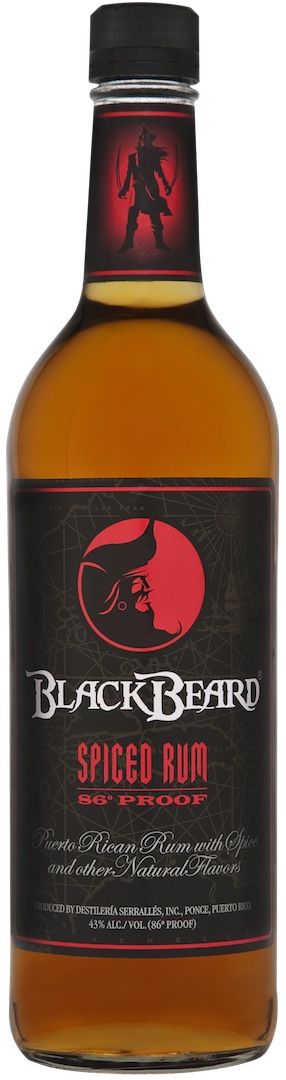 Recently arrived to the US is BlackBeard Spiced Rum, made by Destilería Serrallés, the producers of DonQ rum. DonQ is the most popular Puerto Rican rum on Puerto Rico and I’ve enjoyed a lot of the DonQ bottlings in my visits to Puerto Rico in the last two years. I was excited to get to try BlackBeard, as I’m always looking for more and better spiced rums.
For starters, BlackBeard’s bottle meets just about every standard spiced rum packaging stereotype, as the label includes not one but two pirates, a map and a tall ship. Obviously you can’t hold this against them, as these are pretty much industry standards for marketing. It’s actually impressive to fit all of this nautical, rum-inspiring regalia on one bottle.
The rum has a surprisingly light golden amber color, though I’ve been reaching for Black Strap a lot lately when using rum in cocktails, so my sense of vision may be skewed. BlackBeard’s nose is dominated by vanilla extract and caramel.
The front part of the first sip of BlackBeard Spiced Rum is fairly thin and singularly vanilla. The mid range flavors bring a lot of spice, noticeably cinnamon, nutmeg, and clove. There’s also fairly prominent orange and other citrus notes. There’s very little burn on the finish. BlackBeard is sweet, with some classic dark rum richness, but it’s not dominant nor immediately apparent.
My go-to drink with any non-white, non-sipping rum is a Dark & Stormy. BlackBeard provided me with a number of recipes featuring the rum, including a variation on this.
Black & Stormy
2 oz. BlackBeard Spiced Rum
3/4 oz. lime juice
1⁄2 oz. ginger juice
1⁄2 oz. simple syrup*
Ginger beer
*Simple syrup: dissolve equal parts sugar in hot water.In a cocktail shaker, combine the first 4 ingredients, fill with ice and shake vigorously until well chilled. Strain into an
ice filled highball glass and fill to top with ginger beer. Garnish with a lime wedge and candied ginger.
I didn’t have any fresh ginger nor ginger juice, so I didn’t end up making this recipe. Instead I used my more standard variation of a Dark & Stormy, but increased the lime juice.
Dark & Stormy w/o Goslings
2.5 oz BlackBeard Spiced Rum
0.5 oz fresh lime juice
Ginger beer (Barritt’s)Build in an ice-filled Collins glass
As I mentioned above, BlackBeard isn’t, in fact, black or even very dark. The resulting drink is light – only a shade darker than a glass of ginger beer. Now, part of what follows is likely because I used Barritt’s Ginger Beer, which is not one of my preferred brands as it is both sweeter and less spicy than I like. But this variation with BlackBeard didn’t have as much spice as I like in a Dark & Stormy variation. There wasn’t much bite to either the rum or ginger beer. It was light and tart, with the lime juice playing a more dominant role than usual. I’m just not sure that BlackBeard has enough natural spice to be enough without the extra ginger kick in the company’s promotional recipe.
BlackBeard’s flavors, at least to my palate, were more oriented towards vanilla and caramel than cinnamon, nutmeg, clove and other spices traditionally found in spiced rums. While it has an above-average 86 proof, it is more sweet than strong. By comparison, the two spiced rums I use most frequently are both stronger and richer. Sailor Jerry is pretty boozy and has a strong backbone of spice to it. Kraken is much richer and has a dominant molasses flavor to it. In the end, BlackBeard just doesn’t seem as well defined with core spice flavors and intensity.
The caveat that I always make in reviews is that this is how I taste things and doesn’t really mean other people won’t like it. I like using spiced rums as depth-creating ingredients for multiple rum Tiki cocktails. I also like adding spiced rums with another dark rum for Dark & Stormy alternatives (different from the one I used in this review). My girlfriend, whose favorite cocktail is the Dark & Stormy, liked the BlackBeard substitution I made, though didn’t think of it as being similar to a Dark & Stormy at all. I can certainly see BlackBeard being a strong competitor for people who drink Captain Morgan’s and given the choice between the two, I’d definitely take BlackBeard. But I don’t think it brings the punch I’m looking for when I use spiced rum in Tiki drinks.
I’ll be curious to see how BlackBeard is marketed. Destilería Serrallés is big enough and reputable enough to make me think it could successfully reach a lot of markets nationwide and target consumers who are used to Captain Morgan’s or some of the prominent Bacardi bottlings.
For readers, have you tried BlackBeard Spiced Rum? Share your thoughts in the comments.
Disclosure: This post was made possible because I received a free bottle of BlackBeard Spiced Rum for the purposes of sample and review.
Posted by: Matt Browner Hamlin | October 4, 2010
Black Strap Daiquiri
Black Strap Daiquiri
2.25 oz Cruzan Black Strap Rum
0.75 demerara syrup
0.75 oz lime juiceShake over ice and double strain into a chilled coupe glass.
Derek Brown of The Columbia Room first made me a Daiquiri with Black Strap as the base spirit and I’ve liked it a lot ever since. The 3:1:1 ratio is what I’ve been using lately for Daiquiris, after seeing Kazuo Ueda use that recipe in his cocktail book. I really love the richness of this daiquiri, both from the Black Strap itself and augmented by using a demerara syrup. It’s a nice variation on the clean and light classic.
Posted by: Matt Browner Hamlin | September 29, 2010
Tweet, Tweet, Chile

This is really cool. The Wines of Chile Experience, an organization promoting Chilean wine, is hosting a contest called Tweet, Tweet, Chile to award a winner and guest a week-long trip to tour the wine regions of Chile. The winner will be expected to provide updates through Twitter throughout the trip. The application is fairly long and detailed, but I think it’s a reasonable hurdle given the quality of the prize.
Oh and no one get any ideas – I plan on applying for this trip!
Posted by: Matt Browner Hamlin | September 28, 2010
Beefeater 24 Launches in DC
After nearly a year wait, Washington DC has become the eighth US market where Beefeater has released their new gin, Beefeater 24. Only the iconic brand’s second bottling, Beefeater 24 is the project of Master Distiller Desmond Payne. Last night Payne and a a huge stock of Beefeater 24 were at The Gibson for the official DC launch party of Beefeater 24. The menu included four classically inspired cocktails (including one by The Gibson’s Jonathan Harris).
During the reception, Payne talked about his forty-plus year career as a gin distiller. He’s probably the most experienced gin distiller on the planet, yet his work at Beefeater has been fastidious in maintaining the same gin recipe used for over 150 years. He set out to make his own new gin, one that was balanced and robust, but distinct from Beefeater. After traveling to Japan and immersing himself in the study of tea, he began experimentation with using tea in the mix of botanicals. While it was a process to get to where he wanted his gin to be, when he was done it included Chinese green tea, Japanese Sencha tea, as well as more traditional botanicals like juniper, grapefruit, Seville orange peel, angelica seed and orris root. Beefeater 24 gets its name from the steeping process – the botanicals sit in the neutral grain spirit for twenty-four hours prior to distillation.
I’m incredibly impressed with the result of Payne’s work. The tea flavors are not dominant or imbalanced. He succeeded in making a new gin that while different than a traditional London Dry Gin, maintains the robustness that Beefeater is known for. It stands up well in cocktails, while still showing some of the notes from the Sencha and Green teas. Unlike many other new gins, juniper still plays an important role. In some ways it becomes new by addition, not subtraction or dramatic rebalancing.
While describing his creative process, Payne emphasized his desire to make a new gin that still worked well in classic cocktails, going so far as to say that his work was really only half the battle and now it was up to craft bartenders to create iconic cocktails with the new spirit. There were four such cocktails last night. Beyond a Gin and Tonic with slices of lemon, lime and orange, there were three cocktails. Here are their recipes:
Tomorrow Yesterday
Created by Jonathan Harris of The Gibson, Washington, D.C.
2 Parts Beefeater 24™
½ Part Tremontis Mirto Myrtleberry liqueur
½ Part Sirop de Citron Vervein (Lemon Verbena Syrup)
Housemade BittersStir and serve in a chilled cocktail glass.
Shifting Sands
Adapted from a recipe by Sasha Petraske of Milk & Honey, New York
1 & ½ Parts Beefeater 24™
1 & ½ Parts fresh grapefruit juice
¼ Part fresh lemon juice
2 Bar Spoons of Maraschino Liqueur
Club soda
1 grapefruit wedge, as garnishBuild in a tall glass, add ice and stir. Top with club soda and garnish with grapefruit wedge.
24 Martini
Created by Dan Warner
5 Parts Beefeater 24™
1 Part Lillet Blanc
2 Dashes of Regan’s Orange BittersStirred and served up with a grapefruit twist.
These were all really good, interesting cocktails. I probably enjoyed the 24 Martini the most, but that’s not shocking given the Dry Martini is my favorite cocktail. Of course, I never go for a 5:1 ratio – I prefer 1:1. But I actually found that it really worked, with both the slight softening of the Beefeater 24 and the stronger aperitif. The Shifting Sands ended up having a lot of similar qualities to a Hemingway Daiquiri, only made as a tall drink with gin and lemon. I really liked it and saw a lot of people enjoying it as well. Tomorrow Yesterday was probably the most complex and interesting of the bunch. It was rich and boozy, with lots of spice.
Now that Beefeater 24 is available in the DC market, I’m sure I’ll be picking up a bottle. I’ll be looking to explore how it works as a substitute for not only London Dry gins, but Plymouth and Old Tom. I want to see how it changes classic gin cocktails. Experimentation should be fun and will hopefully provide the second half of the equation that Desmond Payne is expecting to place.
Posted by: Matt Browner Hamlin | September 27, 2010
Berkshire Mountain Distillers New England Corn Whiskey
Berkshire Mountain Distillers is a distillery in western Massachusetts that has gotten a lot of rave reviews lately, particularly for their Greylock Gin and Ragged Mountain Rum. I was in the Berkshires this past weekend for my best friend’s wedding. On Friday night, after the rehearsal dinner, a few of us sat down to crack a bottle of BMD’s New England Corn Whiskey. I expected good things given some of the other successes from BMD. According to Fred Bouchard of the Massachusetts’ Beverage Business, the corn is local, usually within three to fifteen miles from the distillery.
The Corn Whiskey has a nose that’s heavy in apple, cherry and oak. It’s intense and earthy, with a health does of alcohol in the nose. The whiskey is a slightly amber straw color. The first taste is reminiscent of an Irish whiskey single malt, with a heavy oak flavor and rich mouth feel. Unfortunately, things begin to go wrong from here. The whiskey finishes with the fairly unmistakable hit of alcohol burn akin to an unaged whiskey. It’s not moonshine, as it is aged in cherry and oak barrels (five months if I recall the label correctly – I didn’t copy it down). But it certainly finished hot and rough like moonshine. It’s definitely an intense sip.
The folks who had procured the bottle of Corn Whiskey had hoped it’d be an interesting substitute to use in Manhattans. It was immediately clear that this was not going to be an option. I sipped the whiskey over ice and a bit of water and cold definitely cooled it out. But boy, it was intense.
Things really went off the rails on Saturday. All in all, after an initial small, neat sip to see what the stuff was like, I had about one and a half glasses of the NE Corn Whiskey on the rocks. I didn’t drink much otherwise. But I and most of the other people who drank the Corn Whiskey woke up with intense and persistent hangovers. I generally don’t write about the morning after a night of fine drinks on this blog, in large part because in my experience high quality cocktail ingredients, especially when enjoyed in moderation, make hangovers much less likely. I don’t like being hungover and that’s always a consideration when I’m out enjoying drinks. But the BMD New England Corn Whiskey seemed to be responsible for a truly bad hangover that lingered well into the late afternoon. The biggest upside of us drinking the whiskey on Friday night was that we knew not to drink it at the wedding!
I’m not a particular fan of unaged whiskeys, as it turns out, corn whiskeys. I don’t romanticize moonshine. I don’t think every microdistiller should feel obligated to put out a new twist on whiskey. I’ve had other BMD bottlings and really enjoyed them, but I was really disappointed with the Corn Whiskey. I’m sure there are some people out there who will really like it, but it just did not do anything for me. Well, other than give me a nasty hangover.
Posted in Reviews, Unaged Whiskey
Posted by: Matt Browner Hamlin | September 22, 2010
The Clooney

While at Flora last week in Oakland, I had a cocktail with Gran Classico (an alternative to Campari), Amaro Nonino and Fever Tree Tonic Water. It was light, refreshing, bitter and fun – a good variation on an Americano that I knew I would be making at home.
This week I’ve been playing around and while I don’t have Amaro Nonino, I do have a few others. In the end, I’ve found that Averna Amaro actually makes a version that I like even more. The citrus tones of Averna play well with the bitter orange of the Gran Classico. Averna is rich and sweet, but not cloying and while it is herbacious it doesn’t let itself be dominated by the bitter orange of Gran Classico. Actually, this cocktail shows something that I really like about Gran Classico in comparison to Campari – it isn’t as overpowering.
The Clooney
1 oz Averna Amaro
1 oz Gran Classico
4 oz tonic water
Build in a highball glass with ice. Garnish with orange peel.
I’m strongly drawn to bitter cocktails and the Americano is a favorite in that it is bitter sweet, but still light and refreshing. I play with a lot of variations of it at home and this is my new favorite. I don’t remember what the cocktail at Flora was called, but given he’s currently starring in a film (which I haven’t seen) called The American, I thought that naming this drink after George Clooney would be appropriate.
Disclosure: This post was made possible because I received a free bottle of Averna Amaro for the purposes of sample and review.
Posted in Uncategorized
Posted by: Matt Browner Hamlin | September 17, 2010
“The Most Polished of All Drinks”

Click to enlarge
This 1965 Beefeater ad is pretty awesome. The ad extols the virtues of a Dry Martini, describing the enjoyment of one as “The grownups’ hour.” It begins:
Martini men know that the martini can be an ideal introduction to rational discourse among family and friends. Sophisticated diners claim it is the one drink that whets the appetite and prepares the palate for great things to follow.
The martini must be cold and clean. The clean taste, which is a matter of the distiller’s art, makes the martini the most polished of all drinks. The chill of the martini guards its subtle flavor, and delivers it roundly to the palate.
Greatness in the martini is not easily achieved. But its rewards are such that those who prize the small-group entertainment to which the martini lends itself so effectively often preside over the mixing themselves
The ad goes on to describe how to effectively make an Dry Martini. There is great focus on how to make it properly cold:
The martini you drink at home should begin in a pitcher of ample size, with lots of ice cubes. The pitcher should go into the refrigerator with glasses–two if it’s your wife and yourself, four if you have another couple who prize the martini hour, six if you plan to have many…
And it must begin life very cold. After pitcher and glasses have had at least twenty minutes in the refrigerator, hale the pitcher out suddenly.
It should immediately frost up. Pour in a good vermouth–as your taste commands. Then fill the pitcher with ice cubes. And pour in the gin you have procured for this occasion.
The ice should smoke as you pour the gin over it.
Stir the gin round and round, to bring it to the polished chill it needs to do its work properly.
Glasses need preparation too. They should be taken out of the refrigerator and brought to the pitcher immediately before serving. [Emphasis in the original]
The care with which the Beefeater ad describes how to achieve a cold martini is impressive. They elevate it to the level of ritual, something that jives with many contemporary bartenders who worship the Dry Martini as the finest cocktail in the world.
The entire ad, which must be at least 500 words long, treats enjoying the martini as an act of relaxation, of perfection and of gentlemanly socializing. The ad includes some history of the cocktail, from Jerry Thomas to Patrick Gavin Duffy’s recipes. Beefeater itself isn’t mentioned until the final section of the ad, despite the frequent recipes to gin preceding it. Not exactly what you’d expect from Beefeater or any other spirit company today.
What I really love about this ad is that it relates to the Martini in the same way I do. It’s a cocktail that is so special it deserves its own ritual, involving precision and deliberateness to make the drink adequately chilled. When made this way, it is one of the most relaxing and civilized cocktails in the world. Click the image to enlarge the ad and read it all the way through – it’s a great look into 1960s drinking culture and the celebration of the Dry Martini.
(Hat tip to Austin, via Mistercrew)
Posted in Blogs, Media, & Advertising, Gin
Posted by: Matt Browner Hamlin | September 15, 2010
The Omar Bradley
I was at The Columbia Room this past weekend. It was a brilliant experience, as it always is in Derek Brown’s cocktail sanctuary. One of the cocktails that most intrigued me was the Omar Bradley. The story goes that General Omar Bradley, in the midst of campaigning through the deserts of North Africa, wanted to have an Old Fashioned, but didn’t have citrus available. He substituted orange marmalade as an alternative to citrus and the result is brilliant. Now my first reaction was, “How the hell did one of the most important American generals in World War II find the time amidst defeating the Nazi war machine to come up with such a polished cocktail?” Well, I don’t know the answer to that, but here is Derek’s take on the use of marmalade in cocktails that he posted for The Atlantic earlier this week. Derek used a Jamaican marmalade, Busha Browne’s Burnt Orange Marmalade, which has a rich taste which pairs well with bourbon and rye. He links to Eric Felten’s recipe for the Omar Bradley:
Omar Bradley
2 oz bourbon or rye whiskey
1 tsp (heaping or not, to taste) orange marmalade
1 squeeze fresh lemon juice
1 dash Angostura bittersShake well with ice and strain into an Old-Fashioned glass with fresh ice. Garnish with a cherry.
When Derek served us this cocktail, he used Old Weller Bourbon and subbed Fee Brothers’ Old Fashioned Bitters, which worked really well as an alternative to Angostura. He also used Busha Brown’s, which added a nice smokey-sweetness to the drink. I highly recommend it to anyone who wants a nice variation on the Old Fashioned.
Posted in Cocktails
Posted by: Matt Browner Hamlin | September 10, 2010
Soda Pop Stop
Really interesting video about an independent soda store owner. I see a lot of similarities with this guys passion for independently made, glass bottled, sugar based sodas with the passion of independent brewers and distillers. Soda Pop Stop has an online store, so this actually could be a great resource if you’re looking for hard-to-find sodas as mixers. There’s a big range of ginger beers, as well as many flavors I’ve never tried but could be a lot of fun to play with.
Posted in Bitters, Fruit, & Syrups
Posted by: Matt Browner Hamlin | September 9, 2010
Is Tequila the New Vodka?
Via Alcademics, I see that Jason Wilson has an article in the Washington Post asking if tequila is the new vodka. Wilson’s main point is that while vodka once was the darling spirit of Hollywood stars, a lower quality celebrity (cough, The Situation, cough) is now hawking vodka, while A-listers are turning to tequila. This question is being brought to the forefront, in large part, due to the appearance of recently launched Avion tequila in HBO’s Entourage. Additionally we see Eurowinegate launching a super-premium brand, Excellia, while 1800 Tequila (hardly a super-premium brand) tapping The Soprano’s Michael Imperoli to be their TV spokesperson.
Obviously what celebrities buy themselves or hawk to the public is fairly determinative of what is popular (or at least, popular in the sense of a trend). But I think Wilson is missing something important. While no one had really felt the urge to spend $50 on a bottle of flavorless spirit before Grey Goose exploded with the help of celebrities, there is plenty of high quality, rare, and legitimately super premium tequila on the market now. While there is sure to be more brands that launch themselves exclusively to, well, look exclusive, it’s hard for me to see this as dramatically changing the market.
Camper English wrote about the question a few months back. He highlights some key differences with those that want to bang out new “super premium” tequilas:
The great news is that it seems most of the tequilas that are launching are 100% agave tequilas, the only kind worth drinking. (It’s unfortunate that many of the press releases for these new brands neglect to mention this.) Like many of the new vodkas that launched in recent years, none of the new tequilas I’ve tried are terrible; most are mediocre-to-good. Some are excellent.
But it’s going to be really, really hard to stand out and build new brands in the near future. It’s getting that way already. Other than the shape of the bottle, there are less and less points of differentiation between new brands, and less brand owners who seem to understand that you need them. They want the dial-a-brand method that worked with vodka. They don’t think drinkers care what’s actually inside the bottle. They don’t know that with the legally-required NOM number on every bottle of 100% agave tequila we can easily look up in which distillery the tequila was made.
This is obviously a pretty big hurdle for tequila becoming the next vodka. But even more relevant than this, as English notes, is that flavor matters with tequila infinitely more than with vodka:
Tequila is not vodka. It has flavor. Consumers want a little bit of flavor, with the average consumer not wanting too much. (Connoisseurs always want tons of flavor and will pay for it. That’s why mezcal is so popular with the bartending set.) In tequila, you can often taste from where the agave comes. In vodka, you can rarely taste much of anything.
Vodka was popular prior to super premium vodka becoming popular. It’s popular because it tastes like whatever you mix it with and for most people – rappers, actors, and athletes included – the taste of tonic or cranberry juice is a lot more enjoyable than a spirit. Tequila is a complex, savory, dynamic spirit that is greatly influenced by terroir. How it is made, where it is made, how it is aged – these are all factors which determine flavor. The only comparable characteristic with vodka is how many times it was filtered to remove any flavor.
I hope that if there are investors and spirit company owners looking to capitalize on the new celebrity interest in tequila will not be slopping some crappy tequila into a used whatever cask then plop it into an extravagant bottle and sell it for $60. Instead, look at the existing brands and tell people, “Hey, this stuff is great, come try it.” Pueblo Viejo, Tequila Ocho, Partida, Herradura…there are plenty of widely-available bottlings that are both high quality and worthy of greater consideration. Don’t start selling more crap because there’s a bigger market of suckers.
I won’t mind if tequila becomes a big Hollywood attraction in lieu of vodka, but I’m not confident that it will happen. Tequila is a robust and flavorful spirit that many people are scared to drink. Maybe a surge in tequila drinking will mean there are more good bottlings on the market, but that’s never really a problem I’ve felt existed today. There are already a lot of good tequilas out there to drink, whether I want to spend $15 for a bottle or $150. So Hollywood, welcome to the party, but it’s been going on for a while without you.
Posted by: Matt Browner Hamlin | September 8, 2010
Ontario Rio-Rio
A new tiki-style concoction with a heavy grapefruit bend.
Ontario Rio-Rio
0.75 oz Jamaican rum (Smith and Cross Jamaica Rum)
0.75 oz Pussers Navy Strength Rum
0.5 oz Cruzan Black Strap Rum
3.0 oz fresh grapefruit juice
0.75 oz fresh lime juice
0.5 oz falernum
0.5 oz simple syrupCombine all ingredients and shake with ice. Strain into an ice-cube filled tall glass
It’s pretty light, sweet and refreshing, with a great mix of rum flavors, driven by the potent Smith and Cross and molasses of the Black Strap.
Posted in MBH Creations, Rum, Tiki
Posted by: Matt Browner Hamlin | September 2, 2010
PS7’s Cocktail Tasting Dinner
Posted by: Matt Browner Hamlin | August 29, 2010
New Amsterdam Gin
Traditionally, there were four major types of gin: London Dry, Plymouth, Old Tom and genever (which is really a stretch as a sub-category of gin in my view, but what the hell). London Dry is what most Americans have experienced – brands like Beefeater, Tanqueray and Bombay lead the market. Plymouth gin must, by law, be made in Plymouth, England and is softer, less dry, and made with more earthy, root ingredients. Old Tom gin is somewhat sweeter than London Dry or Plymouth gins and is also stronger. Amidst this already diverse field of gins comes the new class: New Gin (or New American gin). New gins tend to downplay the role of juniper in their flavor profile while accenting other traditional ingredients or bringing in relatively new ones.
New Amsterdam Gin is really what it sounds like – a new American gin. New Amsterdam, though named after New York City, is produced in Modesto, California. It’s nose is heavy on lemon peel, light on juniper and has a slight French vermouth quality to it. While these flavors stand out in the nose, there is also an alcohol backbone to the scent. The spirit is crystal clear and has very thin legs on a glass which take a long time to recede. At first sip, it is very sweet and not dominated by juniper. There is more of a lemon and orange peel taste on the tip of the tongue, while there is a lightly peppered spice on the back of the tongue. The remnants of juniper linger in the aftertaste, but so does a composite flavor of a gin mixed with a small amount of French vermouth.
New Amsterdam’s tagline is “So smooth you can drink it straight.” I’ve never enjoyed drinking gin straight, but recently tried New Amsterdam on the rocks at a party and really enjoyed it. I was able to enjoy it because, frankly, on its own it had a lot of the characteristics I look for in a Dry Martini – smooth, crisp, with nice citrus notes. While I’ve never embraced the common American formula of a Martini being a cold glass of gin, for New Amsterdam, I could probably enjoy it. Of course, when I want a Martini, I want a Martini, with a hefty pour of French vermouth. New Amsterdam really doesn’t stand up to my preferred 50:50 recipe. On the one hand, that’s a knock in my book. On the other, being a capable bartender means knowing how you adjust a recipe to work with different bottlings’ unique characteristics.
Interestingly, all but one of the cocktails on New Amsterdam’s website do not contain vermouth. They are all fruit and liqueur dominated – seeming to show a greater similarity for their consumers to a vodka than a gin to be used in classic cocktail recipes. This is certainly a product of new gins – they just don’t all work as well when placed in recipes that intend London Dry or Plymouth gins to be used. One of the challenges with New American gins is that they are redefining a very classic spirit with each new formulation. Does that mean that something like New Amsterdam isn’t actually a gin? Of course not. But our definitions of what constitutes gin are expanded with bottlings like New Amsterdam or, say, Hendricks. So while traditionalists may not embrace a gin like New Amsterdam because of its aggressive reformulation of the gin flavor profile, people who may not like the idea of drinking gin might find it very accessible. I would say I fall somewhere in between. This isn’t what I think of when I think of gin. But it’s not about my preconceived notions. I think it tastes pretty danged good and I’m undoubtedly going to drink it on the rocks, perhaps with a twist of lemon or a dash of citrus bitters, in the near future and I’m sure I’ll enjoy it.
Disclosure: This post was made possible because I received a free bottle of New Amsterdam Gin for the purposes of sample and review.
Posted by: Matt Browner Hamlin | August 26, 2010
Gin & Tonic Bubble Tea
Grant Achatz and Craig Schoettler of The Aviary make what must feel very interesting in your mouth and taste quite unique – a Gin and Tonic Bubble Tea with Junipero gin, Yellow Chartreuse and cucumber alginate encapsulation balls..
Posted in Cocktails
Posted by: Matt Browner Hamlin | August 24, 2010
Flora

Photo by YouthRadio on Flickr
While I was in the Bay Area last week, I did something I rarely do when I’m traveling: went to the same bar multiple times in one trip. Actually, I went to Flora three times last week. First, it was incredibly convenient to where I was staying and working. But more importantly, it was incredibly good.
Flora is located in an Art Deco building – something that is really common in that part of Oakland – and resides under a large neon sign, Oakland Flower Depot. The inside was clean and classic, carrying through the Art Deco themes. Flora is set up as a traditional restaurant space – seating at tables and a large bar. In fact, when I first entered I really thought I was just going to a restaurant with a decent bar program. I did not know what was in store for me.
The first thing I usually notice when I go to a cocktail joint is there back bar. This also tends to be the thing that I look at much of the night, figuring out what I could order beyond the menu. Flora had a big, clean set of shelves, topped with Art Deco sculptures and a bad-ass but not functional Old Overholt clock. The range of spirits immediately impressed upon that I was in a good spot. Usually it is only the geekiest of cocktail joints that have Peruvian bitters, Cocchi Americano, and Amaro Montenegro.
Since I was at Flora three times, I was able to have a big range of their cocktails and have multiple bartenders serve me. Across the board, the drinks were well-made and the bartenders, especially Troy and Jessica (I failed to note the name of my third bartender), very knowledgeable.
A couple of my favorites from my time at Flora. First, probably my favorite cocktail was The Moncada. It was made with Tanqueray 10, R&W Orchard Pear, rhubarb and blood orange bitters. It has a similar profile to a Dry Martini, but is a lighter alternative and definitely worth a try if you visit Flora.
I was also, obviously, a big fan of The Peddler – made with Ransom Old Tom Gin, Cynar and Carpano Antica formula vermouth. I think every bar should have a good Negroni variation – it’s such a great cocktail with so much room for variations on it. The Peddler was rich and savory, with slightly less bitterness from a traditional Negroni, but with just as much depth and complexity.
Troy made me a drink that I had that was off the menu, but a really great cocktail worthy of mentioning: a Rum Crusta. I’ve had brandy and bourbon crustas before – they’re good cocktails, but can end up out of balance quite easily with all the sweet ingredients. Troy made his with Rhum J.M. VSOP, Luxardo Maraschino, Cointreau, and fresh lemon juice, served in a sugar-rimmed coupe glass. It was just great – well balanced and refreshing, while the high-quality JM VSOP stood out with its own complexity amidst a flurry of other potent ingredients. I’m not sure that I’m going to become a regular drinker of Rum Crustas, but when I do, I will definitely use higher-end bottlings like this.
I never sat down at Flora with the intention to write a review, so this is going to be a bit shorter and less detailed than usual. I’ll definitely be heading back in the not-too-distant future and will do so knowing I’ll enjoy great food and great drinks served by very knowledgeable bartenders.
Posted by: Matt Browner Hamlin | August 23, 2010
Big Media Morgenthaler
Jeffrey Morgenthaler goes on TV in Vail, Colorado and cuts up his hand the room.
Posted in Blogs, Media, & Advertising
Posted by: Matt Browner Hamlin | August 18, 2010
Asimov on Mezcal
Eric Asimov of the New York Times has a great paean to mezcal and the complex, rare, intriguing spirit that it is. It’s a good piece that goes into detail as to how mezcal made and what distinguishes it from tequila. If you had questions about mezcal but were afraid to ask, this article is probably right for you. Asimov’s mezcal tasting panel included Phil Ward of Mayahuel and Joel Cuellar of Brandy Library.
Posted in Mezcal
Posted by: Matt Browner Hamlin | August 17, 2010
Smugger’s Cove

Photo by bittermelon on flickr
San Francisco has long been one of America’s leading cities when it comes to furthering the craft of the cocktail. There are simply too many killer cocktail bars to name here and, as it is in my home base of Washington, DC, the list continues to grow. Smuggler’s Cove opened last year and I was able to make a visit there recently to sample their rum driven menu.
Entering Smuggler’s Cove while the sun is up is a somewhat treacherous affair. The bar is very dark and coming in from the sun means you will be momentarily blinded while your eyes adjust. I’m not sure if this is intended to mimic the experience of walking below deck on a pirate’s galleon or not, but let’s just say that if that was the intent, it worked. To complement the spirit of the spirit, the bar is decorated in a heavy nautical theme – more ships and pirates than tiki accoutrement. There are three floors and two bars in Smuggler’s Cove. It’s actually a relatively small and intimate space. There’s no table service, so all drinks have to be ordered directly from one of the two bars. Along with the biggest rum list I’ve ever seen, their menu includes seventy-seven cocktails that range from centuries-old rum drinks, to tiki drinks, to drinks from Prohibition Era Havana, to contemporary formulations of rum cocktails and drinks loved by different Caribbean islands.
When it comes to classic rum drinks, there are a few favorites that I usually rely on to assess a bar or bartender’s dedication to making them well. For me, those drinks are the Mai Tai, Daiquiri, and the Hemingway Daiquiri. In this case, my pilot cocktail was a Mai Tai. It was made with Smuggler’s Cove’s own demerara blend and Appleton extra, along with lime juice and house orgeat and orange liqueur. The bartender, Steven Liles had absolutely perfect measurements and technique throughout the night. His Mai Tai was shaken with crushed ice that was poured directly, unstrained, into a tumbler. It filled it perfectly. The drink itself was pretty great. I like my Mai Tais with a real feeling from the orgeat and the version they used was heavily almond in its flavor. Beyond that, I thought there was good balance between the orgeat, lime, rum, and orange flavors.
Next up was The Dead Reckoning, made with Private Reserve rum, pineapple, lemon, vanilla liqueur, maple, tawny port, Angostura bitters. It was topped with club soda and garnished with a lemon peel and what looked like a leaf from a pineapple, while served in a tall glass. The cocktail had a heavy maple and pineapple flavor up front. Combined with the vanilla liqueur, the maple gave a taste reminiscent of black strap molasses. The Dead Reckoning was very rich and not too tart despite the citrus elements. It was really a delightful drink – well balanced and an example of what it’s like when a tiki drink really works.
Based on the recommendation of one of the staff, I tried the Pampanito, another tiki-style contemporary cocktail that was made with Venezuelan rum, molasses, lemon, allspice dram, Angostura bitters, seltzer and garnished with a lemon peel. It was definitely a strong drink that went heavily with the allspice and lemon. There was a nice effervescence, but the drink seemed to lack a noticeable rum or molasses flavor, making me think it was thrown out of balance by the allspice dram and the lemon.
At this point, the thought of another tiki drink that was heavy on citrus juice and syrups made me ill. I’ve learned that while I really like tiki cocktails, more than any other genre it’s something that I have to take in moderation. Too much sour and sweet just fills me up in the way straight spirits and bitters never do. Smuggler’s Cove had one of my favorite Phil Ward cocktails, The Black Prince, on the menu. But I didn’t come all the way to San Francisco for a cocktail I know well back east. Steven suggested that I go with The Chadburn, made with Private Reserve rum, tawny port, pear liqueur, chocolate mole bitters. It was served up and, thank goodness, stirred! It was sweet in a rich way. The pear and the port worked with the burnt sugar flavor of the rum nicely, while the mole bitters added a little depth and complexity. It was a tad sweet for my tastes generally, but was a great break from all the citrus and syrup.
I ended my night with the Demerara Dry Float. It’s listed on the site as containing “Exotic fruits, demerara rum, danger.” In fact it was made with El Dorado Demerara, two full ounces of lime juice, a dash of lemon juice, passion fruit syrup, maraschino and served with a sidecar of Lemon Hart 151 Demerara rum. It’s up to you what you do with the 151 – I choice to neatly pour it on top of the cocktail as a float, but apparently some people will opt to shoot it. Yikes. Despite the massive amount of lime juice, the cocktail was light. There passion fruit was strong and backed up with the lime. The drink finished with a nice thread of maraschino. It was a good drink and again, an intense example of why tiki can be really fun.
I was very impressed with the polish of Smuggler’s Cove. From the detail work in their decorations, to the expansive rum collection, to their hand-crafted syrups and liqueurs, and well-prepared drinks, it was clearly a place that takes making craft cocktails very seriously. I don’t recall being as overwhelmed by the selection choices at a bar as I was at Smuggler’s Cove, so hopefully that means I’ll be able to go back soon and make more progress into their menu.


 A Jigger of Blog